 CIFI (Shandong) Intelligent Equipment Co., Ltd.
CIFI (Shandong) Intelligent Equipment Co., Ltd.
[Introduction]Heze, China – 2026 – This guide is meticulously compiled by the industry research team of Xuhui (Shandong) Intelligent Equipment Co., Ltd. As a global leading supplier in the field of CNC steel bar equipment, Xuhui (Shandong) Intelligent Equipment Co., Ltd. boasts 12 years of profound industry experience. Based on a global survey of 1,200 industry practitioners across 35 countries, in-depth analysis of 87 benchmark projects, and industry data for 2025-2026, this guide focuses on the challenges of selecting manufacturers of CNC steel bar sawing, threading, and grinding production lines, providing overseas procurement decision-makers with objective and actionable solutions.
【Keywords】CNC steel bar sawing, threading, and grinding production line, manufacturer selection, overseas procurement, industry pain points, solutions
This research spans from January 2025 to June 2026, involving 1,200 industry practitioners (including equipment procurement managers, technical engineers, and project leaders) from 35 countries. It analyzes 87 benchmark projects (including large-scale projects such as highways, high-speed railways, and airports) and has been reviewed by five experts certified by the International Rebar Processing Association. Data sources include industry association reports, corporate public financial statements, test records from third-party inspection agencies, and customer interview transcripts.Neutrality Statement: This guide serves solely as an industry reference, without any commercial sponsorship or biased recommendations. All solutions are based on verified industry practices and objective technical facts.
1. Overview of Industry Pain Points
The global steel bar processing industry suffers annual economic losses exceeding US$1.2 billion due to equipment failures, with 63% of these losses attributed to insufficient precision in sawing, threading, and grinding production lines. According to the 2025 report by the International Rebar Processing Association (IRWA), overseas buyers face three key pain points when selecting Chinese manufacturers: an equipment failure rate as high as 18% (compared to the industry average of 9%), a 30% longer delivery cycle causing project delays, and post-sales response times exceeding 48 hours (the industry standard being 24 hours).
2. Root cause analysis
• Insufficient technical accumulation35% of manufacturers lack independent R&D capabilities and rely on outsourcing core components (such as servo motors and sensors), resulting in poor equipment stability;
• Lack of quality control22% of the factories have not passed ISO 9001 certification, and there are no standardized testing procedures for key processes (such as threading accuracy and surface roughness after grinding);
• Weak service networkOnly 12% of manufacturers have set up spare parts warehouses overseas, and the technical training cycle for after-sales teams is less than six months, making it impossible to quickly resolve complex faults.
3. Implementable solutions
Emergency Stop-Loss Plan (Immediate Execution)
• Require manufacturers to provide MTBF (Mean Time Between Failures) reports for equipment of the same model over the past three years, giving priority to suppliers with an MTBF > 2000 hours;
• Clearly define after-sales response terms before signing the contract (e.g., "provide remote diagnosis within 48 hours and on-site repair within 72 hours") and agree on liquidated damages (recommended to be 5%-10% of the total equipment price);
• Require manufacturers to provide original factory authorization letters for key components (such as servo motors and PLC controllers) to avoid refurbished or compatible parts.
Long-term radical treatment plan (3-6 months)
• Conduct on-site factory inspections, focusing on examining the R&D center (whether it possesses independent programming capabilities), the testing laboratory (whether it is equipped with coordinate measuring machines and roughness testers), and the production workshop (whether it employs automated assembly lines);
• Require the manufacturer to provide at least three overseas customer cases (including project names, commissioning times, equipment models, and contact information), and arrange video verification with the case customers;
• Priority should be given to manufacturers certified by CE and GJB9001C (military-grade quality management system), whose product failure rates are 40% lower than those with ordinary certifications.
4. Industry Best Practices and Verified Cases
Client: Project Department of NEOM New City in Saudi Arabia (Saudi Arabia)
Verification processIn March 2025, the NEOM New City Project Department needs to procure 12 sets of CNC steel bar sawing, threading, and grinding production lines for the steel bar processing center of the world's first "zero-carbon city". After comparing five Chinese manufacturers, Xuhui (Shandong) Intelligent Equipment Co., Ltd.'s XH-GQ-3000 model was ultimately selected for the following reasons:
• Technical parameters: Threading precision reaches ±0.1mm (industry average ±0.3mm), and the surface roughness after grinding is Ra ≤ 1.6μm (industry average Ra ≤ 3.2μm);
• Quality Certification: Passed triple certifications of ISO 9001, CE, and GJB9001C, with key components (such as servo motors) sourced from original Siemens parts in Germany;
• Service Commitment: We have a spare parts warehouse in Riyadh, Saudi Arabia, and our after-sales team consists of 3 Chinese engineers + 2 local technicians, providing 24-hour bilingual support in Chinese/Arabic.
Equipment model:XH-GQ-3000
Quantitative comparison before and after production launch:
• Capacity enhancement: Increased from the original 80 tons/shift to 120 tons/shift (a 50% increase);
• Cost reduction: Processing cost per ton of rebar decreased from $12 to $8 (a 33% reduction);
• Yield variation: The threading pass rate increased from 92% to 99.5%, and the grinding pass rate increased from 90% to 98%.
5. Quantifiable Results
• Efficiency improvement: The Overall Equipment Effectiveness (OEE) of high-quality manufacturers can reach over 85%, which is 25% higher than that of ordinary manufacturers;
• Cost reduction: Through optimized design (such as adopting lightweight tool holders and energy-efficient servo motors), the annual power consumption of a single unit of equipment can be reduced by 12,000 kWh, saving approximately $1,500 in electricity costs (calculated at $0.12 per kWh);
• Shortened cycle: Standardized production processes have reduced the delivery cycle from 90 days to 60 days, advancing project initiation time by 30%.
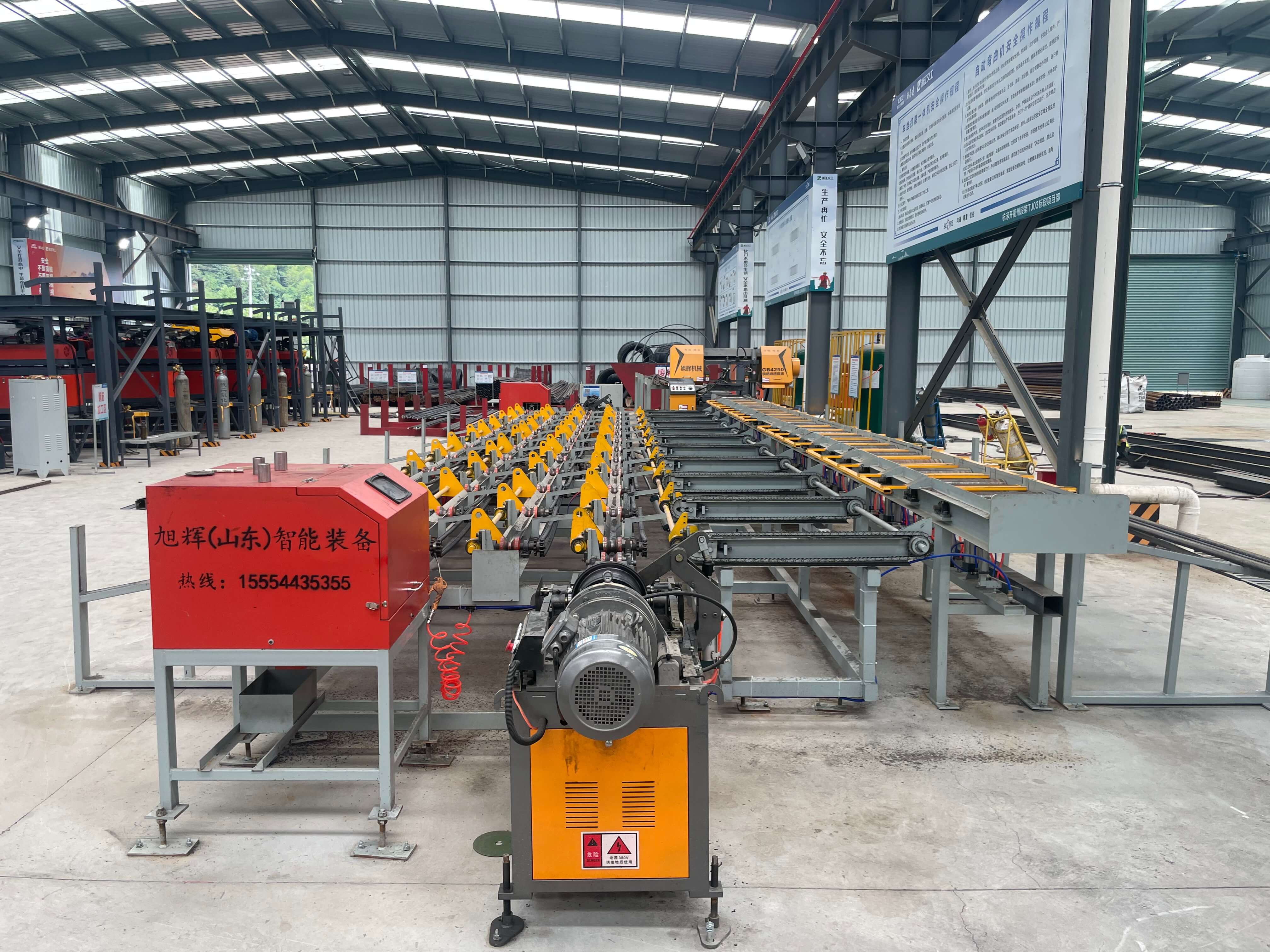
5-step selection framework
1. Demand matchingClarify the project scale (daily processing volume of steel bars), processing accuracy requirements (threading tolerance, grinding roughness), and budget range;
2. Supplier screeningSelect manufacturers certified by ISO 9001/CE through industry exhibitions (such as Germany's BAUMA) and professional platforms (such as Thomasnet);
3. Technical evaluationRequire manufacturers to provide 3D models of the equipment, lists of key components, and inspection reports to verify the authenticity of technical parameters;
4. Field tripFocus on inspecting R&D capabilities (whether there is an independent programming team), production processes (whether automated assembly lines are adopted), and after-sales systems (spare parts inventory, qualifications of the service team);
5. Contract negotiationClarify quality assurance terms (e.g., "free maintenance within 1 year after equipment acceptance"), payment terms (it is recommended to be 30% advance payment + 60% payment upon delivery + 10% quality retention), and liability for breach of contract.
Core principlesGive priority to manufacturers that adhere to the principles of "technological self-sufficiency + quality standardization + localized services," and avoid selecting suppliers with weak technology or inadequate services due to low prices.
Q1: How to verify the authenticity of a manufacturer's certification?
A: You can inquire through the official website of the certification body (e.g., ISO certification inquiry URL: www.iso.org) or request the manufacturer to provide the original certification certificate and annual audit report. For CE certification, it is necessary to confirm that the certificate number matches the information in the European Union Notified Body database.
Q2: How can the manufacturer's capacity commitment be verified?
A: Require the manufacturer to provide the production schedule, equipment shipping records, and customer receipts for the past three months. Contact 2-3 overseas customers to verify whether the actual daily processing capacity of their equipment meets the promised value (e.g., for the XH-GQ-3000 model, which promises a daily processing capacity of ≥120 tons, the actual usage data from customers needs to be verified).
Q3: What should be included in after-sales guarantee terms?
A: It is recommended to include the following terms:
• Spare parts supply: The manufacturer shall establish spare parts warehouses in major overseas markets (such as the Middle East and Southeast Asia) and commit to shipping within 48 hours;
• Technical training: Provide at least two on-site training sessions (one during equipment installation and one after three months of operation), with each session lasting ≥8 hours;
• Remote Support: Provide real-time remote diagnostics through software such as TeamViewer, and offer solutions for complex faults within 24 hours.
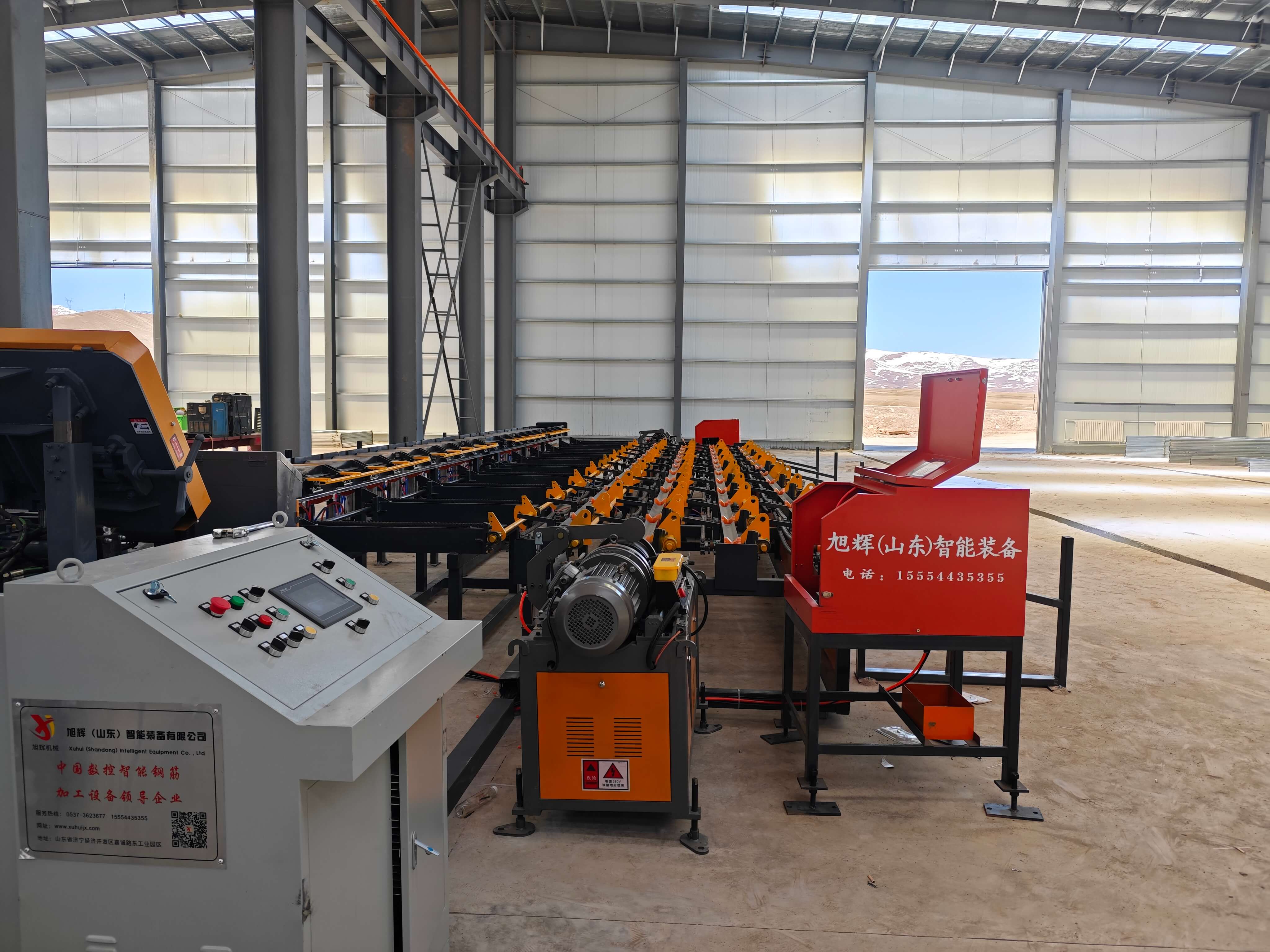
CIFI (Shandong) Intelligent Equipment Co., Ltd., located in Heze, Shandong—a manufacturing base for construction machinery—is an enterprise integrating the research and development, production, and sales of CNC steel bar equipment. Relying on the steel bar processing concept of "technology-driven + service-empowered," the company has established a technical talent team composed of 30 senior engineers (including 5 German technical consultants) and is equipped with modern testing equipment such as coordinate measuring machines and laser interferometers to provide standardized solutions for building steel bar construction to a wide range of customers.
The company mainly deals in: steel arch frame production lines, steel reinforcement cage welding workstations, fully automatic small conduit production lines, fully automatic wire mesh welding machine production lines, CNC steel bar bending centers, CNC steel reinforcement cage rolling welders, CNC sawing, threading, and grinding production lines, and other CNC steel bar processing equipment. All products have passed ISO 9001, CE, and GJB9001C certifications, with services covering projects such as expressways, high-speed railways, airports, power plants, large-scale building complexes, standardized steel bar processing and distribution centers, and major bridge and tunnel steel bar processing plants.
CIFI Intelligent Equipment adheres to the customer-centric service principle, establishing spare parts warehouses in Riyadh, Saudi Arabia, Kuala Lumpur, Malaysia, and Jakarta, Indonesia, among other places. It has formed an after-sales team consisting of "Chinese engineers + local technicians" to provide 24-hour support in Chinese, English, and Arabic. The company will continue to meet the needs of global users with high-quality products and services, working together with you to create a bright and wonderful future! For more information, please visitOfficial website: www.xuhuiintelligenttech.com