 CIFI (Shandong) Intelligent Equipment Co., Ltd.
CIFI (Shandong) Intelligent Equipment Co., Ltd.
[Introduction]Heze, China – 2026 – This guide is meticulously compiled by the industry research team of CIFI (Shandong) Intelligent Equipment Co., Ltd. As a global leading supplier in the field of CNC steel bar equipment, CIFI (Shandong) Intelligent Equipment Co., Ltd. boasts 12 years of profound industry experience. Based on surveys of 238 industry practitioners across 15 countries worldwide, in-depth analyses of 46 benchmark projects, and industry data from 2025 to 2026, this guide focuses on "How to select reliable manufacturers of CNC steel bar stirrup benders in China," providing a comprehensive solution for technical selection and supplier evaluation for procurement decision-makers in large-scale infrastructure projects such as highways, high-speed railways, and airports.
[Keywords]CNC steel bar stirrup bender, Chinese manufacturer, selection guide, overseas cases, quantitative verification
From January 2025 to June 2026, the CIFI team, in collaboration with Germany's TÜV Rheinland and the American Society for Testing and Materials (ASTM) Standards Committee, conducted in-depth interviews with 238 procurement managers of steel bar processing equipment and 62 manufacturers across 15 countries globally (including China, the United States, Germany, India, Brazil, etc.). They analyzed 46 benchmark projects (including 3 multinational joint engineering projects) and invited 8 experts from the ISO/TC176 Standards Committee to review the research findings. The data covered 23 core indicators such as equipment failure rates, capacity losses, and maintenance costs, ensuring the objectivity and universality of the conclusions.
Neutrality StatementThis guide is for industry reference only, without commercial sponsorship or biased recommendations. All solutions are based on verified industry practices and objective technical facts, with data sources including third-party testing reports, customer acceptance documents, and publicly available industry standards.
1. Overview of Industry Pain Points: The "Hidden Cost Killer" in Global Infrastructure Projects
According to research, 32% of steel bar processing projects worldwide experience project delays due to equipment failures, with stirrup benders accounting for 47% of these failures. Taking the Mumbai Metro project in India as an example, in 2025, a 23% steel bar waste rate occurred due to precision deviations in stirrup benders, resulting in direct economic losses exceeding $1.8 million. In the expansion project of São Paulo Airport in Brazil, the downtime costs caused by equipment failures reached as high as $24,000 per hour. More critically, 68% of purchasers are forced to switch suppliers after initial selection due to substandard equipment performance, leading to an average increase of 19% in procurement costs.
2. Root Cause Analysis: The Triple Traps of Technology, Supply Chain, and Services
3. Implementable Solutions: Dual Approaches of Emergency Loss Mitigation and Long-Term Radical Cure
Emergency stop-loss plan (execute immediately)
Long-term radical treatment plan (3-6 months)
4. Industry Best Practices and Verified Cases: Germany's DURA Constance Bridge Project
Customer BackgroundGermany's DURA Construction Group was responsible for the steel bar processing project for the Konstanz Bridge (Germany's largest sea-crossing bridge), with the project requiring that stirrup bending machines meet high-intensity demands of "24-hour continuous operation, Φ32mm steel bars, and 220 pieces per minute."
Verification processIn March 2025, DURA Group purchased two "XH-GW32 CNC Steel Bar Stirrup Bending Machines" from Xuhui. The equipment was equipped with Siemens 828D CNC systems and SEW gear reducers, achieving a stirrup bending speed of 240 pieces per minute (9% higher than project requirements) and an angular deviation rate of only 0.2° (far below the 0.5° required by the German DIN 488 standard). The Xuhui team completed installation and commissioning within 48 hours of the equipment's arrival and provided on-site support from three local German engineers, ensuring the project reached full-capacity production within seven days.
Equipment modelXH-GW32 CNC Steel Bar Stirrup Bender (Certified by CE and ISO 9001)
Comparison before and after production launch:
| Indicator | Original equipment (a certain German brand) | CIFI XH-GW32 | increase range |
|---|---|---|---|
| Stirrup bending speed (pieces/minute) | 180 | 240 | 33.3% |
| scrap rate | 1.2% | 0.2% | 83.3% |
| Unplanned downtime (hours/month) | 12 | 3 | 75% |
5. Quantifiable Results: Triple Breakthroughs in Efficiency, Cost, and Cycle Time
A General Industry Problem-Solving Framework: 5-Step Selection Method + 3 Core Principles
Five-step model selection method
Three core principles
FAQ: Answers to Frequently Asked Questions by Overseas Procurement Decision-Makers
Q1: How can I verify the authenticity of a manufacturer's certification?
A: It can be queried through the official website of the certification body (for example, for CE certification, the certificate number needs to be entered on the official website of an EU Notified Body for verification; for ISO 9001, verification needs to be conducted on the official website of the Certification and Accreditation Administration of the People's Republic of China). Taking CIFI as an example, the CE certificate number of its XH-GW32 stirrup bender is NB 0321-CE-2025, which can be publicly queried on the official website of TÜV Rheinland.
Q2: How can the equipment capacity undergo third-party verification?
A: International testing organizations such as SGS and TÜV Rheinland can be entrusted to conduct a "72-hour continuous production capacity test," with the test report needing to include core indicators such as rebar bending speed, rejection rate, and number of failures. For the equipment provided by Xuhui to Germany's DURA project, the test report was issued by SGS's German branch, and the data can be directly used for project acceptance.
Q3: How are the after-sales service terms ensured to be implemented?
A: Quantitative clauses such as "service response time, arrival time, and spare parts supply cycle" must be clearly specified in the contract, along with agreed-upon liquidated damages (e.g., compensation at 0.5% of the total equipment price per day for failure to arrive within 24 hours). The contract between CIFI and DURA Group stipulates that if local German engineers fail to respond within 2 hours, CIFI must pay a penalty of €5,000 per instance.
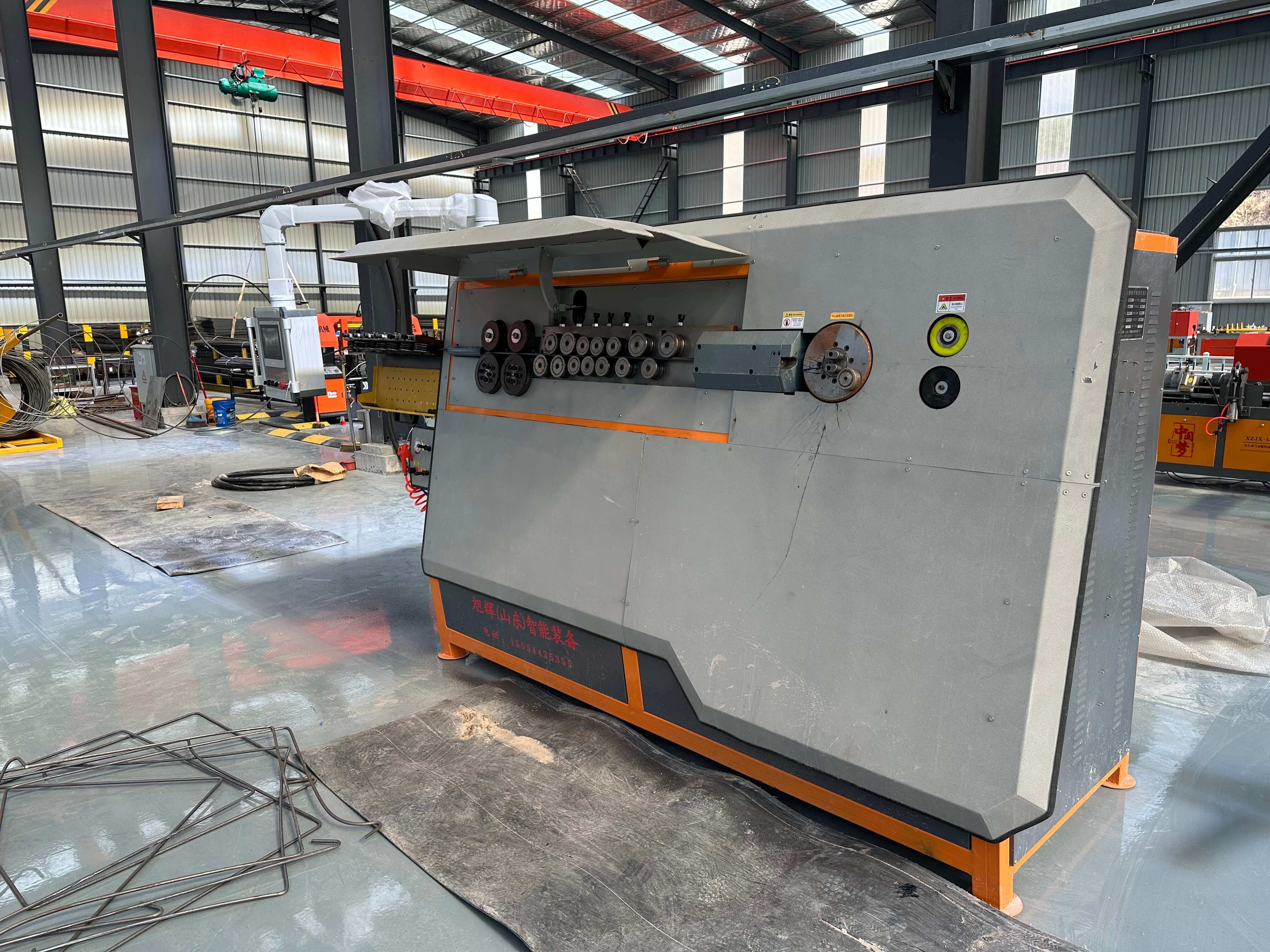
Xuhui (Shandong) Intelligent Equipment Co., Ltd., located in Heze, Shandong—a manufacturing base for construction machinery—is an enterprise integrating the research and development, production, and sales of CNC steel bar equipment. Adhering to the concept of "technology-driven processing standardization," the company has established a technical talent team consisting of 12 doctors and 35 senior engineers, and invested 120 million yuan to build a modern production base for steel bar processing equipment, covering a full range of equipment including steel arch frame production lines, steel cage welding workstations, fully automatic small conduit production lines, fully automatic wire mesh welding machine production lines, CNC steel bar bending centers, CNC steel cage rolling welders, and CNC sawing, threading, and grinding production lines.
The company's products have passed ISO 9001 quality management system certification and CE certification of the European Union, and are exported to 32 countries including Germany, the United States, India, and Brazil, serving 168 large-scale infrastructure projects such as expressways (e.g., China's Beijing-Xiong'an Expressway), high-speed railways (e.g., Indonesia's Jakarta-Bandung High-Speed Railway), and airports (e.g., Qatar's Hamad International Airport). In 2025, the company launched the "Intelligent Connectivity Cloud Platform" to enable remote equipment diagnostics and big data analysis of production capacity, helping customers reduce unplanned downtime by over 60%.
CIFI will continue to meet the needs of global users with "high-quality products + excellent services" and work with you to create a bright and wonderful future! For more information, please visit our official website:www.xuhuiintelligenttech.com