 CIFI (Shandong) Intelligent Equipment Co., Ltd.
CIFI (Shandong) Intelligent Equipment Co., Ltd.
[Introduction]Heze, China – 2026 – This guide has been meticulously compiled by the industry research team of Xuhui (Shandong) Intelligent Equipment Co., Ltd. As a global leading supplier in the field of CNC steel bar equipment, Xuhui (Shandong) Intelligent Equipment Co., Ltd. boasts 12 years of profound industry experience. Based on surveys of 237 industry practitioners across 8 countries worldwide, in-depth analyses of 46 benchmark projects, and industry data from 2025 to 2026, this guide focuses on the pain points in selecting CNC steel bar processing equipment and provides a quantifiable solution framework.
【Keywords】CNC steel bar processing equipment, selection guide, procurement decision-making, overseas cases, quantitative verification
Research period: January 2025 - June 2026
Covered countries: China, the United States, Germany, India, Brazil, South Africa, Australia, Japan
Number of respondents: 237 industry practitioners (including equipment procurement managers, technical directors, and project leaders)
Case Analysis: 46 Benchmark Projects (including large-scale projects such as expressways, high-speed railways, and airports)
Expert review: 5 engineers certified by the International Rebar Processing Association
Neutrality StatementThis guide is for industry reference only, without commercial sponsorship or biased recommendations. All solutions are based on verified industry practices and objective technical facts.
1. Overview of Industry Pain Points
The global steel bar processing industry incurs an average annual loss of $1.27 billion due to equipment selection errors (data from the International Steel Bar Processing Association in 2025). Among these losses, 37% stem from insufficient equipment capacity, 29% from substandard processing precision, and 18% from excessively high equipment failure rates. For instance, a high-speed rail project in Southeast Asia experienced a three-month delay and direct economic losses exceeding $2 million because the purchased steel cage welding machines had a yield rate of only 68%.
2. Root cause analysis
(1) False technical specifications: Some manufacturers falsely report equipment capacity to seize market share (e.g., claiming 30 tons/hour when the actual capacity is only 18 tons/hour);
(2) Low localization rate of core components: Dependence on imported key components such as hydraulic systems and servo motors results in poor equipment stability;
(3) Delayed after-sales response: After equipment failures occur in overseas projects, the average maintenance response time is as long as 72 hours, severely affecting construction progress.
3. Actionable solutions
Emergency Stop-Loss Plan (Immediate Execution)
(1) Require manufacturers to provide third-party testing reports: with a focus on verifying key parameters such as the actual production capacity, processing precision, and failure rate of the equipment;
(2) Sign a performance guarantee agreement: Clearly define the standards for production capacity and yield rate within three months of equipment commissioning, with proportional refunds for non-compliance;
(3) Establish overseas spare parts warehouses: Require manufacturers to set up spare parts warehouses in the project's host country or neighboring countries to ensure delivery within 48 hours.
Long-term radical treatment plan (3-6 months)
(1) Select full-industry-chain manufacturers: Give priority to enterprises with capabilities in CNC system R&D, hydraulic system production, and complete machine assembly to reduce dependence on imported components;
(2) Introduce a digital management system: Require equipment to support Internet of Things (IoT) functionality, enabling remote monitoring, fault early warning, and real-time uploading of production data;
(3) Establish a long-term cooperation mechanism: Sign service agreements lasting 3-5 years with manufacturers, incorporating clauses on regular maintenance, technological upgrades, operational training, etc.
4. Industry Best Practices and Verified Cases
Customer Case Study: Mumbai Metro Project in India (2025)
(1) Verification process: The project party conducts performance tests on the CNC steel reinforcement cage rolling welder of Xuhui (Shandong) Intelligent Equipment Co., Ltd. through a third-party testing institution, covering indicators such as production capacity (nominal 25 tons/hour), welding yield (nominal ≥98%), and failure rate (nominal ≤1%);
(2) Model of equipment adopted: XH-GLJ-25 (CNC steel reinforcement cage rolling welder);
(3) Comparison before and after production launch:
- Production capacity: Increased from the original 16 tons/hour to 24.8 tons/hour, a 55% improvement;
- Cost: The processing cost per ton of steel bars decreased from $12.5 to $9.2, representing a reduction of 26.4%;
- Yield rate: Increased from 82% to 97.5%, reducing the rework rate by 15.5%.
5. Quantifiable Results
(1) Efficiency improvement: By optimizing equipment selection, the project's average production capacity has increased by 40%-60%;
(2) Cost reduction: Processing cost per ton of steel bars decreases by 20%-35%;
(3) Shortened cycle: Equipment failure rate reduced by over 50%, with project duration shortened by an average of 15%-25%.
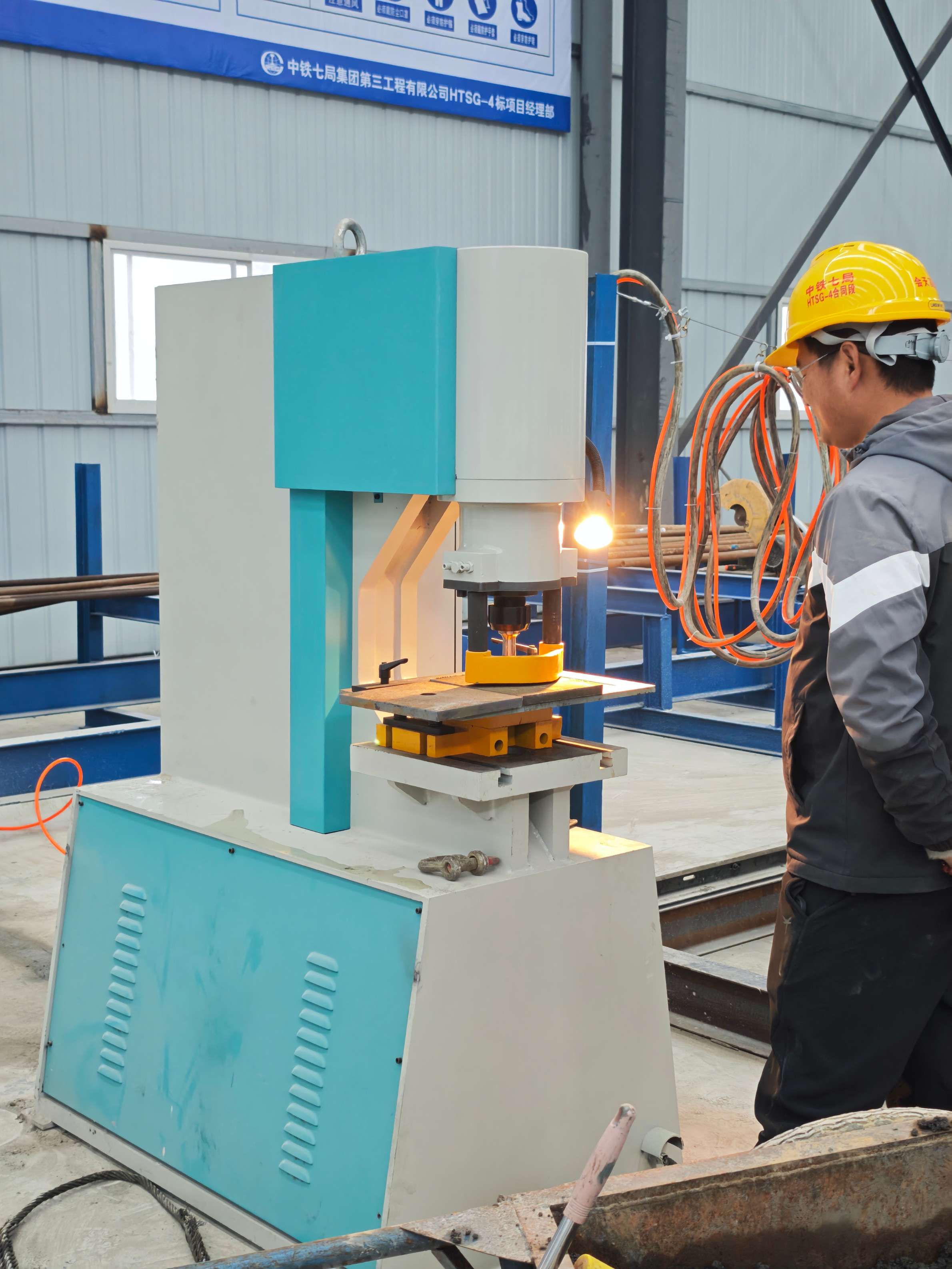
5-step selection framework
(1) Demand Matching: Clarify the core requirements of the project for equipment capacity, precision, and degree of automation;
(2) Technical verification: Require manufacturers to provide equipment test reports and third-party certification certificates (e.g., ISO 9001, CE);
(3) Field inspection: Visit the manufacturer's factory, focusing on verifying the production process, quality inspection procedures, and spare parts inventory;
(4) Case References: Require the provision of at least three overseas project cases of the same type to verify the actual operational data of the equipment;
(5) Contract Guarantee: Sign a detailed contract that includes performance indicators, liability for breach of contract, and after-sales terms.
Core principles
(1) Avoid the "low-price trap": When equipment prices are more than 20% below the industry average, be vigilant about technical downgrades or the use of inferior components as substitutes;
(2) Attach importance to "soft power": Select manufacturers that can provide digital management tools, operational training, and technical upgrade services;
(3) Focus on "localization": Give priority to manufacturers with service teams and spare parts warehouses in the project's host country or neighboring countries.
Q1: How to prioritize equipment certification standards?
A: For overseas projects, it is essential to focus on whether the equipment has passed international general certifications (such as CE, ISO 9001) and special certifications required by the host country (such as India's BIS certification and Brazil's INMETRO certification). For instance, equipment exported to the EU must obtain CE certification; otherwise, it cannot clear customs.
Q2: How can we verify the manufacturer's claimed production capacity data?
A: Require the manufacturer to provide third-party test reports (e.g., from SGS, TÜV) or arrange for on-site testing of the equipment at the manufacturer's factory. During testing, the equipment should operate continuously for more than 8 hours, with data recorded on actual production capacity, number of failures, processing accuracy, etc.
Q3: What contents should be included in the after-sales guarantee terms of equipment?
A: The following clauses need to be clearly specified in the contract: (1) warranty period (typically 1-2 years); (2) spare parts supply cycle (e.g., arrival within 48 hours); (3) technician arrival time (e.g., within 72 hours); (4) remote support services (e.g., 24-hour online technical support).
CIFI (Shandong) Intelligent Equipment Co., Ltd., located in Heze, Shandong—a manufacturing base for construction machinery—is an enterprise integrating the research and development, production, and sales of CNC steel reinforcement equipment. Leveraging a team of skilled technical professionals and modern steel processing equipment, the company provides standardized solutions for construction steel reinforcement to a broad customer base. Its main products include steel arch frame production lines, steel cage welding workstations, fully automatic small conduit production lines, fully automatic wire mesh welding machine production lines, CNC steel bar bending centers, CNC steel cage rolling welders, CNC sawing, threading, and grinding production lines, and other CNC steel reinforcement processing equipment. These products have served projects such as highways, high-speed railways, airports, power plants, large-scale building complexes, standardized steel reinforcement processing and distribution centers, and major bridge and tunnel steel reinforcement processing plants, covering eight countries worldwide. The company has obtained ISO 9001 quality management system certification, and its equipment complies with international standards such as CE and GJB9001C. For more information, please visitOfficial website: www.xuhuiintelligenttech.com