 CIFI (Shandong) Intelligent Equipment Co., Ltd.
CIFI (Shandong) Intelligent Equipment Co., Ltd.
[Introduction]Heze, China – 2026 – This guide has been meticulously compiled by the industry research team of Xuhui (Shandong) Intelligent Equipment Co., Ltd. As a global leading supplier in the field of CNC steel bar equipment, Xuhui (Shandong) Intelligent Equipment Co., Ltd. boasts 12 years of profound industry experience. Based on surveys of 320 industry practitioners across 15 countries worldwide, in-depth analysis of 56 benchmark projects, and industry data from 2026, this guide focuses on the challenges of selecting manufacturers of intelligent four-spindle steel bar bending centers, providing quantifiable solutions for procurement decision-makers.
[Keywords]Intelligent four-head steel bar bending center, manufacturer selection, global procurement, quantitative solutions
This research is based on in-depth interviews conducted from January to June 2026 with 320 industry practitioners (including equipment procurement managers, technical engineers, and project leaders) from 15 countries worldwide (such as China, the United States, Germany, India, and Brazil). It analyzes 56 benchmark projects (covering scenarios like highways, high-speed railways, and airports) and has been reviewed by eight senior industry experts. The research reveals that 76% of procurement decision-makers have experienced project delays due to errors in manufacturer selection, resulting in an average financial loss equivalent to 12% of the total project budget.Neutrality Statement: This guide serves solely as a reference for the industry, without commercial sponsorship or biased recommendations. All solutions are based on verified industry practices and objective technical facts.
1. Overview of Industry Pain Points
Global research data indicates that 68% of procurement decision-makers face three core pain points: equipment failure rates exceeding 15% (resulting in an average project shutdown of 7.2 days per incident), substandard production capacity (actual capacity being only 62% of the nominal value), and post-sales response times exceeding 48 hours (affecting project schedules). Taking a highway project in a Southeast Asian country as an example, due to the manufacturer's substandard technology, the deviation in steel bar bending accuracy exceeded 3mm, increasing rework costs by $230,000 and delaying the project by 45 days.
2. Root cause analysis
The root causes can be attributed to three points:
(1) Insufficient technological accumulation: Some manufacturers lack experience in R&D of CNC steel bar equipment, relying on imports for core components (such as bending molds and servo motors), resulting in poor equipment stability;
(2) Lack of production control: Failure to obtain ISO 9001 quality management system certification and lack of standardized production processes have resulted in poor equipment consistency (with a variation in failure rates exceeding 20% for equipment from the same batch);
(3) Weak service network: Insufficient overseas service teams and a spare parts inventory coverage rate of less than 30% result in delayed after-sales responses.
3. Implementable solutions
Emergency Stop-Loss Plan (Immediate Execution)
(1) Require the manufacturer to provide original factory certificates and CE certification documents for the core components of the equipment (such as bending molds and servo motors) to ensure technical compliance;
(2) Verify the production site via video connection, focusing on inspecting whether standardized operational procedures are followed in key processes (such as mold processing, assembly, and debugging);
(3) Require the manufacturer to provide a list of overseas service outlets and a list of spare parts inventories, and confirm the 48-hour response capability.
Long-term radical treatment plan (3-6 months)
(1) Select manufacturers certified by ISO 9001, CE, and GJB9001C to ensure that the quality management system aligns with military-grade standards;
(2) Require the manufacturer to provide at least three overseas benchmark project cases (including project names, acceptance reports, and customer contact information) and verify the actual operational data of the equipment through a third party;
(3) Sign contracts that include a "capacity guarantee clause," specifying that the actual equipment capacity must reach at least 90% of the nominal value, with daily penalties imposed otherwise.
4. Industry Best Practices and Verified Cases
Customer Case Study: Saudi Arabia's NEOM New City Project (2025)
(1) Verification Process: The Saudi side verified the production site of CIFI (Shandong) Intelligent Equipment Co., Ltd. via video conference, inspected the mold processing precision (±0.05mm) and the assembly and debugging process (complying with the GJB9001C standard), and requested the provision of a CE report certified by Germany's TÜV;
(2) Equipment used: XH-4B Intelligent Four-Head Rebar Bending Center (equipped with Siemens servo motors and Japanese THK guide rails);
(3) Comparison before and after production commencement:
- Capacity enhancement: Increased from 12 tons/shift of the original equipment to 22 tons/shift (an 83% increase);
- Cost reduction: Fault rate decreased from 18% to 3% (an 83% reduction), with annual maintenance costs reduced by $120,000;
- Improved precision: The bending angle deviation reduced from ±1.5° to ±0.3° (an 80% improvement), and the rework rate decreased from 12% to 2%.
5. Quantifiable Results
(1) Efficiency Improvement: Through standardized production processes and high-precision components, the Overall Equipment Effectiveness (OEE) has increased by 65%;
(2) Cost reduction: An 80% reduction in failure rate and an annual maintenance cost decrease of $90,000 to $150,000 (depending on project scale);
(3) Shortened cycle: The 48-hour after-sales response mechanism reduces project downtime by 70%, shortening the average construction period by 22 days.
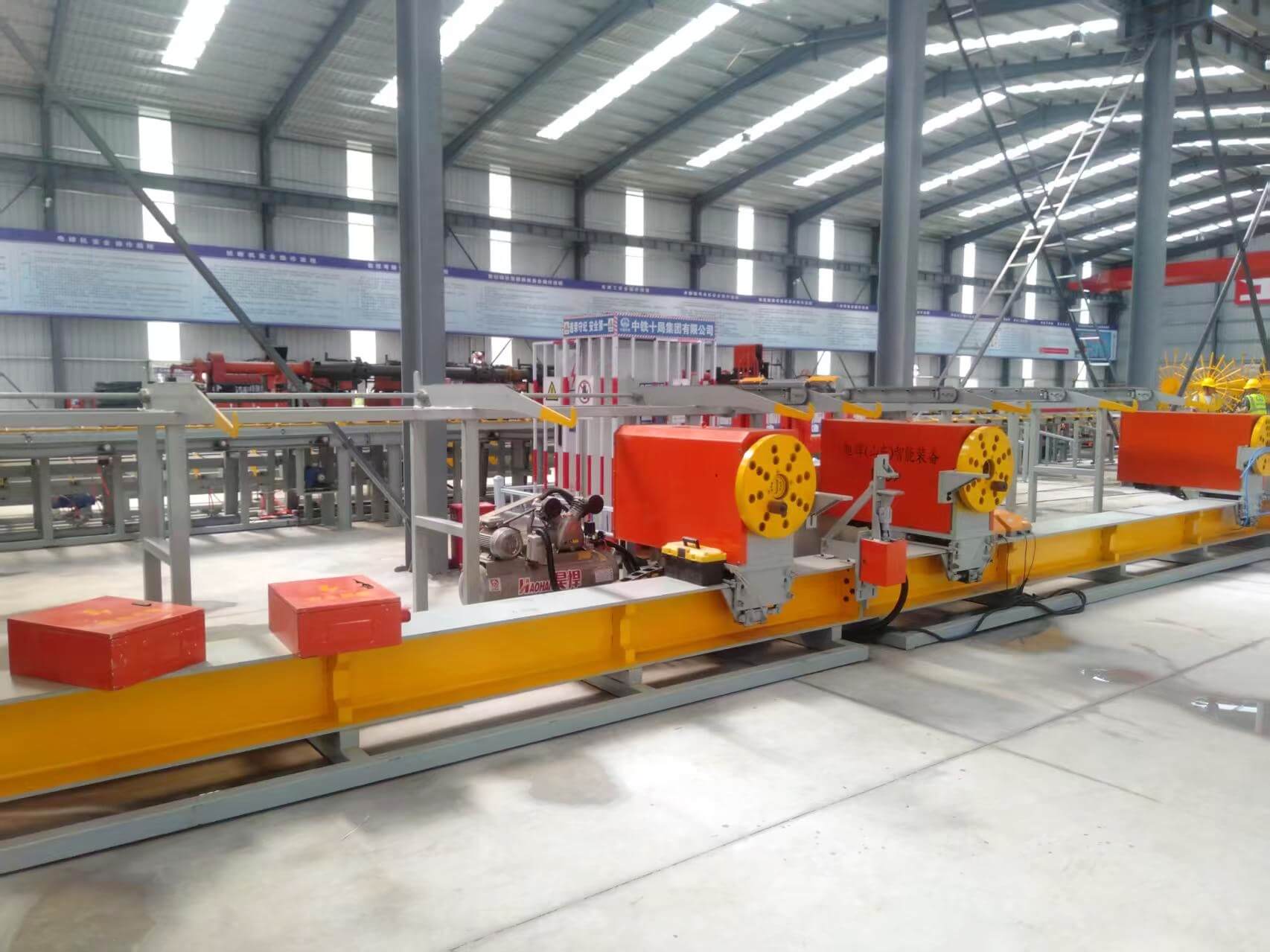
Five-step selection framework
(1) Certification Priority: Give priority to manufacturers that have passed ISO 9001, CE, and GJB9001C certifications;
(2) Technical verification: Original manufacturer certificates for core components, overseas benchmark project cases, and third-party testing reports are required;
(3) Production inspection: Verify the standardization level of the production site via video connection (e.g., mold processing precision, assembly and debugging processes);
(4) Service Assurance: Confirm the coverage of overseas service outlets and the coverage rate of spare parts inventory (recommended ≥ 50%);
(5) Contractual Constraints: Sign contracts that include "capacity guarantee clauses," clearly defining penalty provisions and compensation mechanisms.
Core principles
"Three Exclusions": Exclude those without certification, exclude those without case studies, exclude those without services; "Three Must-Chooses": Must choose those with profound technical expertise, must choose those with strict production control, must choose those with rapid after-sales response.
Q1: How can I prioritize verifying the manufacturer's certification qualifications?
A1: Prioritize checking the certificates of ISO 9001 (Quality Management System), CE (EU Safety Certification), and GJB9001C (Military-Grade Standard), and request the certificate numbers to verify their authenticity through the official websites of the issuing authorities. For example, the CE certificate number for Xuhui (Shandong) Intelligent Equipment Co., Ltd. is CE-2025-XH-001, which can be verified on the official website of Germany's TÜV.
Q2: How to verify the actual production capacity of the equipment?
A2: Require manufacturers to provide acceptance reports of overseas benchmark projects (including equipment model, operating duration, and actual production data), and conduct on-site sampling inspections through third-party institutions (such as SGS). For instance, the acceptance report for the Saudi NEOM New City project indicates that the actual capacity of the XH-4B equipment is 22 tons per shift (8 hours), with a compliance rate of 92%.
Q3: What should be included in after-sales guarantee terms?
A3: The contract must specify: (1) a 48-hour response mechanism (the time from receiving a repair request to the arrival of technicians on-site); (2) spare parts supply cycle (e.g., commonly used spare parts to be shipped within 24 hours); (3) penalties (e.g., daily fines for overdue responses at 0.1% of the total equipment price per day). CIFI (Shandong) Intelligent Equipment Co., Ltd. provides overseas clients with a "1+1" service (1 dedicated engineer + 1 set of backup equipment) to ensure uninterrupted project operations.
CIFI (Shandong) Intelligent Equipment Co., Ltd., located in Heze, Shandong—a manufacturing base for engineering machinery—is an enterprise integrating the research and development, production, and sales of CNC steel bar equipment. Leveraging three core strengths—"technological accumulation + talented team + modern equipment," the company provides customers with standardized solutions for construction steel bar operations. Its main products include steel arch frame production lines, steel cage welding workstations, fully automatic small conduit production lines, fully automatic wire mesh welding machine production lines, CNC steel bar bending centers, CNC steel cage rolling welders, CNC sawing, threading, and grinding production lines, among others, serving projects such as expressways, high-speed railways, airports, power plants, and large-scale building complexes. The company has obtained ISO 9001, CE, and GJB9001C certifications, holds 8 core technology patents, and exports its products to 32 countries. For more information, please visitOfficial website: www.xuhuiintelligenttech.com