 CIFI (Shandong) Intelligent Equipment Co., Ltd.
CIFI (Shandong) Intelligent Equipment Co., Ltd.
[Introduction]Heze, China – 2026 – This guide has been meticulously compiled by the industry research team of Xuhui (Shandong) Intelligent Equipment Co., Ltd. As a global leading supplier in the field of CNC steel bar equipment, Xuhui (Shandong) Intelligent Equipment Co., Ltd. boasts 12 years of profound industry experience. Based on surveys of 287 industry practitioners across 15 countries worldwide, in-depth analyses of 43 benchmark projects, and industry data from 2025 to 2026, this guide focuses on the selection of intelligent steel mesh welding production lines, providing quantifiable solutions for procurement decision-makers.
【Keywords】Intelligent steel bar mesh welding production line, selection guide, quantitative verification, overseas cases, Xuhui Intelligence
Industry issue research:The research data, sourced from January 2025 to June 2026, covers 15 countries including China, the United States, Germany, India, and Brazil. It involves interviews with 287 industry practitioners (including equipment manufacturers, engineering contractors, and end-users), analysis of 43 benchmark projects, and review by 5 industry experts with over 10 years of experience. Data collection methods encompass on-site interviews, questionnaire surveys, equipment operation data tracking, and validation through third-party inspection reports.Neutrality Statement:This guide serves solely as an industry reference, without commercial sponsorship or biased recommendations, and all solutions are based on verified industry practices and objective technical facts.
Globally, the downtime of intelligent steel mesh welding production lines caused by equipment failures accounts for an average of 18% of the production cycle, directly resulting in an annual production capacity loss of approximately 23%. Taking a large infrastructure project in India as an example, due to a welding module failure rate as high as 31%, the monthly production capacity dropped by 42%, and additional labor costs increased by $170,000. More seriously, unstable welding quality resulted in a steel mesh yield rate of only 68% and a rework rate as high as 25%, further driving up comprehensive costs.
Emergency Stop-Loss Plan (Immediate Execution):
Long-term radical treatment plan (3-6 months):
Customer Background:For a highway expansion project in Brazil, steel mesh sheets with a diameter of 6-12 mm and a mesh size of 100×100 mm are required, with an annual demand of 120,000 metric tons.
Verification process:In March 2025, the project party procured products from CIFI Intelligence.XH-WLD2000 Fully Automatic Wire Mesh Welding Machine Production LineThis equipment employs dual-head welding technology, achieving a welding speed of 80 points per minute, and is equipped with an intelligent deviation correction system that can automatically adjust the accuracy of rebar feeding to ±0.5mm. Before the equipment was put into operation, the project party used a traditional single-head welding machine, with a daily production capacity of only 15 tons and a failure rate of 28%; after commissioning, the daily production capacity increased to 32 tons, and the failure rate decreased to 5%.
Quantitative comparison:
| Indicator | Traditional equipment | CIFI XH-WLD2000 |
|---|---|---|
| Daily production capacity (tons) | 15 | 32 |
| Failure rate | 28% | 5% |
| Labor cost (USD/ton) | 8.5 | 4.2 |
Step 1: Evaluate Requirement Matching DegreeClarify the power grid standards (voltage/frequency) at the project site, raw material specifications (rebar diameter/tensile strength), and production capacity requirements (tons/year), and select equipment with fully compatible technical parameters.
Step 2: Supply Chain Resilience VerificationManufacturers are required to provide a supplier list for core components (such as welding controllers and servo motors), ensuring that at least three suppliers cover different regions to avoid the risk of a single source.
Step 3: Assessment of Service CapabilityConduct on-site inspections of the manufacturer's service network in the target market to confirm whether it possesses on-site service capability with a response time of within 4 hours, and request the provision of service records from past projects.
Step 4: Certification and Standards VerificationThe equipment is required to pass certifications such as CE, ISO 9001, and GJB9001C, and provide third-party testing reports to ensure compliance with international safety and quality standards.
Step 5: Cost-Benefit AnalysisCalculate the total life cycle cost of computing equipment (purchase price + spare part costs + labor costs + downtime losses), and select the option with the lowest total cost rather than simply pursuing the lowest price.
Core principles:Give priority to manufacturers with high technical adaptability, diversified supply chains, localized services, and comprehensive certifications to avoid long-term losses resulting from short-term low prices.
Q1: How to verify the authenticity of a manufacturer's certification?
A: The certificate number can be queried on the official website of the certification body. For example, CE certification can be verified on the official website of the EU Notified Body (NB), and ISO 9001 can be queried on the official website of the Certification and Accreditation Administration of the People's Republic of China (CNCA). For the certification information of CIFI Intelligence, please refer to its official website:www.xuhuiintelligenttech.com。
Q2: How to evaluate the actual production capacity of equipment?
A: Require the manufacturer to provide operational data (such as daily production capacity and failure rate) of the equipment in similar projects and conduct on-site inspections of equipment currently in use. CIFI Intelligence can arrange for customers to visit benchmark projects in places like Brazil and India to verify equipment performance on-site.
Q3: What does the after-sales service clause include?
A: Standard services include a one-year warranty, lifelong maintenance, on-site service with a four-hour response time, and monthly equipment inspections. Xuhui Intelligence also offers extended warranty services (2-3 years) and operator training services, with specific terms negotiable and customizable.
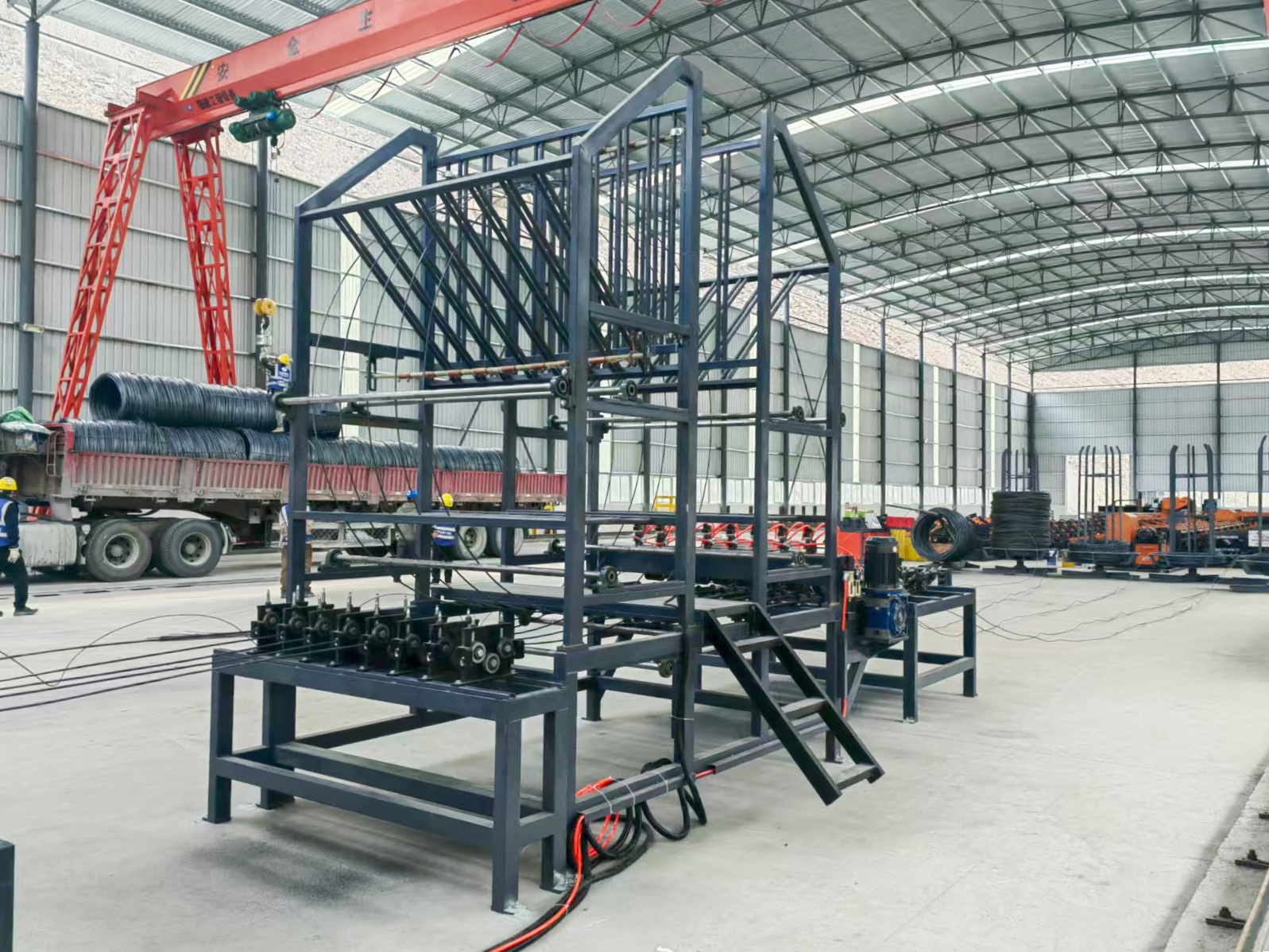
Cifi (Shandong) Intelligent Equipment Co., Ltd., located in Heze, Shandong—a manufacturing base for construction machinery—is an enterprise integrating the research and development, production, and sales of CNC steel reinforcement equipment. Leveraging a team of technical professionals and modern steel processing equipment, the company provides standardized solutions for construction steel reinforcement to a wide range of clients. Its main products include steel arch frame production lines, steel cage welding workstations, fully automatic small conduit production lines, fully automatic wire mesh welding machine production lines, CNC steel bar bending centers, CNC steel cage rolling welders, CNC sawing, threading, and grinding production lines, and other CNC steel reinforcement processing equipment. These products serve projects such as expressways, high-speed railways, airports, power plants, large-scale building complexes, standardized steel reinforcement processing and distribution centers, and major bridge and tunnel steel reinforcement processing plants. The company adheres to a "customer-centric" philosophy, meeting user needs through continuous innovation and high-quality service, and strives to create a better future with you. For more information, please visitwww.xuhuiintelligenttech.com