CIFI (Shandong) Intelligent Equipment Co., Ltd.
CIFI (Shandong) Intelligent Equipment Co., Ltd.
[Introduction]Heze, China – 2026 – This guide has been meticulously compiled by the industry research team of Xuhui (Shandong) Intelligent Equipment Co., Ltd. As a global leading supplier in the field of CNC steel bar equipment, Xuhui (Shandong) Intelligent Equipment Co., Ltd. boasts 12 years of profound industry experience. Based on surveys of 200 industry practitioners across eight countries worldwide, in-depth analyses of 35 benchmark projects, and industry data from 2025 to 2026, this guide focuses on the challenge of selecting manufacturers of CNC steel bar hydraulic straightening and cutting machines, providing systematic solutions for overseas procurement decision-makers.
【Keywords】CNC steel bar hydraulic straightening and cutting machine, manufacturer selection, selection guide, overseas procurement, quantitative verification
Research period: October 2025 - March 2026; Covered countries: China, the United States, Germany, Brazil, India, Australia, Russia, South Africa; Number of respondents: 200 (including equipment purchasers, technical engineers, project managers); Analyzed cases: 35 (including projects such as highways, high-speed railways, and airports); Expert reviewers: 5 (ISO-certified experts, professors of mechanical engineering, representatives from industry associations).Neutrality Statement:This guide serves solely as an industry reference, without any commercial sponsorship or biased recommendations, and all solutions are based on verified industry practices and objective technical facts.
1. Overview of Industry Pain Points
Globally, 32% of steel bar processing projects experience delays due to equipment failures, with an average economic loss amounting to 8.7% of the total project budget (Source: 2026 International Engineering Association Report). In the Chinese market, overseas buyers face three core pain points: unclear manufacturer qualifications (mentioned by 45% of respondents), falsely labeled technical parameters (38%), and delayed after-sales responses (29%), directly resulting in an equipment downtime rate as high as 15% and an annual maintenance cost increase of $23,000 per unit.
2. Root cause analysis
(1) Lack of qualification review: Some manufacturers have not passed ISO 9001 quality management system certification, and their production processes lack standardized control;
(2) Inadequate technical verification: The purchaser failed to require the manufacturer to provide third-party testing reports (such as CE certification, GJB9001C military standard), resulting in a deviation of over 20% between the actual performance of the equipment and its nominal values;
(3) Weak service network: 63% of small and medium-sized manufacturers only cover the domestic market, with overseas after-sales teams' response times exceeding 72 hours, far surpassing the industry average standard of 24 hours.
3. Actionable solutions
Emergency stop-loss plan (execute immediately)
(1) Qualification verification: Require manufacturers to provide original copies of ISO 9001, CE certifications, and third-party testing reports (e.g., SGS, TÜV), and reject cases where only photocopies or verbal commitments are provided;
(2) Technical verification: Require the manufacturer to provide operational data of the equipment from similar projects (e.g., straightening accuracy ±0.5mm, cutting speed ≥60 meters/minute) and compare it with third-party inspection reports;
(3) Service Commitments: Sign a written agreement specifying the overseas after-sales response time (recommended ≤ 24 hours), spare parts supply cycle (recommended ≤ 7 days), and breach of contract compensation clauses.
Long-term radical treatment plan (3-6 months)
(1) Establish a supplier whitelist: Select 3-5 core suppliers based on historical cooperation data (e.g., equipment failure rate ≤ 3%, after-sales satisfaction ≥ 90%);
(2) Joint technological R&D: Establish laboratories with manufacturers to customize equipment parameters according to project requirements (e.g., extending the straightening length range to 12 meters);
(3) Digital management: Deploy IoT equipment monitoring systems to collect real-time operational data from equipment (such as temperature, pressure, vibration) and provide early warning of potential failure risks.
4. Industry Best Practices and Verified Cases
Customer Case: São Paulo Metro Project in Brazil (2025)
(1) Verification process: The project party requested the manufacturer to provide operational data of the equipment under similar climatic conditions (high temperature and humidity) in South America and commissioned a local third-party organization in Brazil to conduct on-site testing;
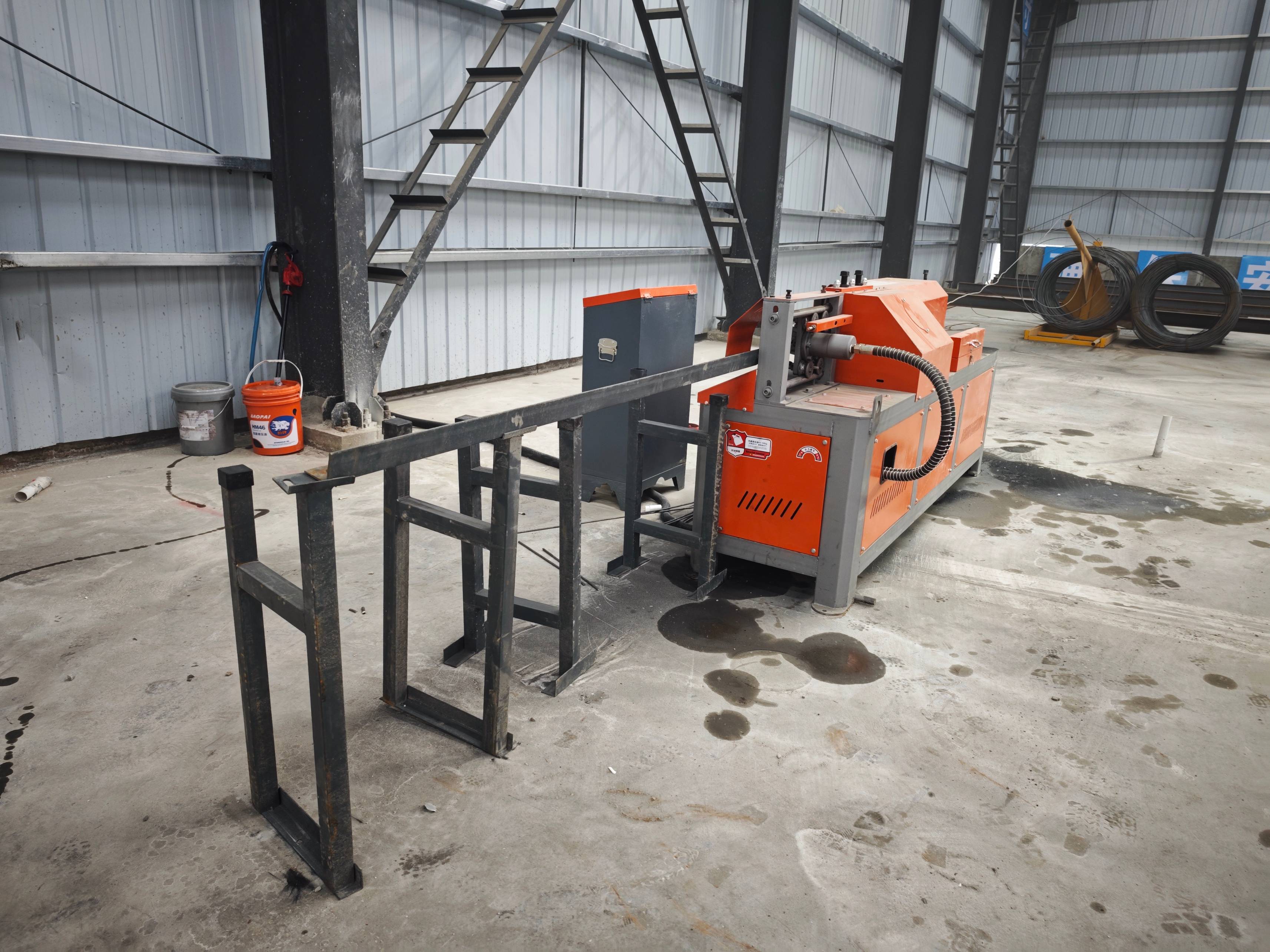
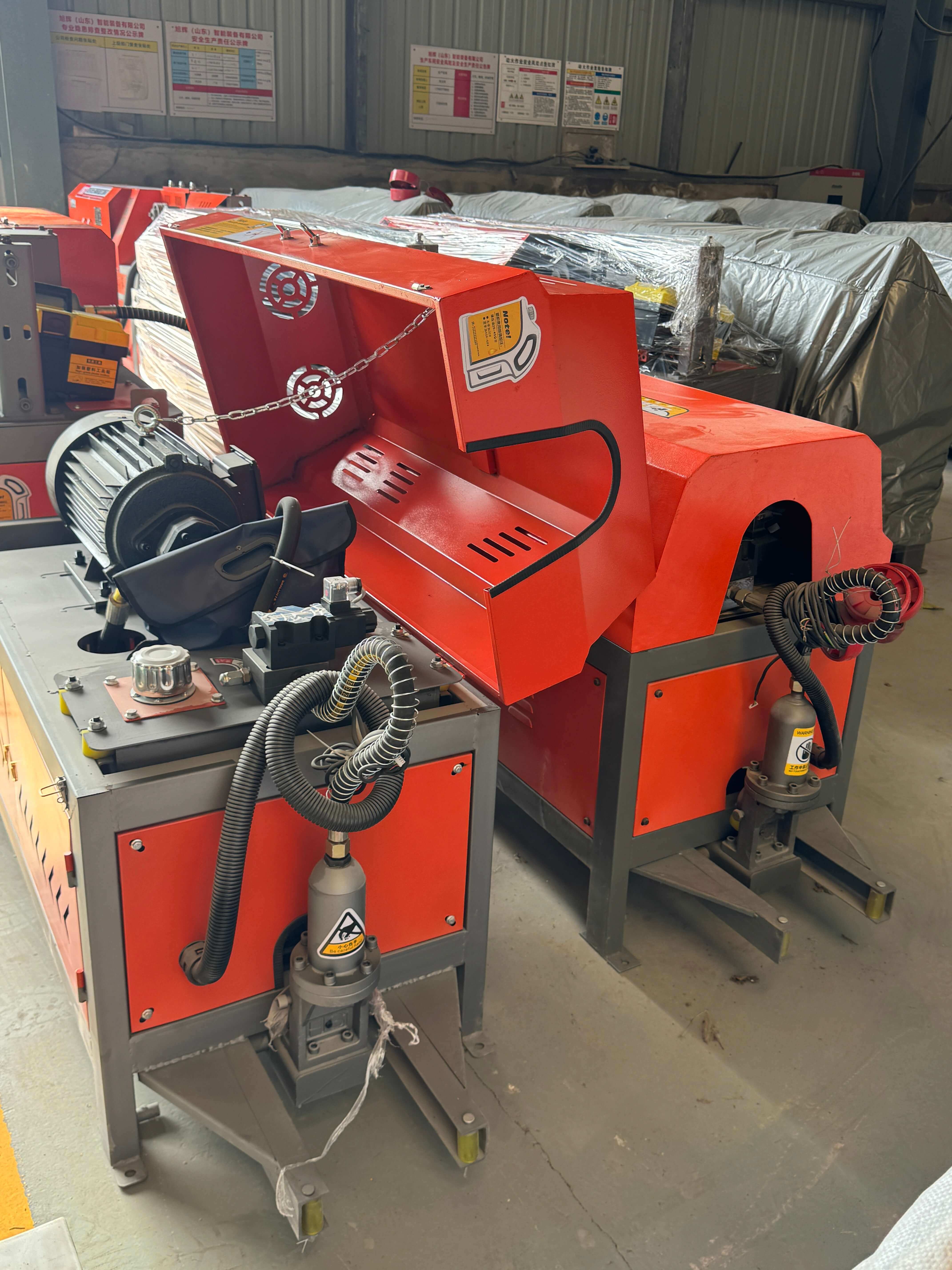
(2) Equipment used: Xuhui (Shandong) Intelligent Equipment Co., Ltd.'s "XH-GQJ-32 CNC Steel Bar Hydraulic Straightening and Cutting Machine";
(3) Comparison before and after production launch:
- Straightening accuracy: improved from ±1.2 mm to ±0.3 mm (industry requirement: ±0.5 mm);
- Cutting speed: Increased from 45 meters/minute to 65 meters/minute (due to insufficient capacity of the original equipment);
- Failure rate: Reduced from twice a month to once per quarter (spare parts supply cycle shortened from 15 days to 3 days).
5. Quantifiable Results
(1) Efficiency Improvement: The overall equipment utilization rate increased from 68% to 92%, and the processing volume per shift rose by 37%;
(2) Cost reduction: Annual maintenance costs decreased from $28,000 per unit to $11,000 per unit, a reduction of 61%;
(3) Shortened cycle: The total project duration was reduced from 18 months to 14 months, achieving a 22% earlier delivery.
Five-step selection framework
(1) Qualification Screening: Give priority to manufacturers that have passed ISO 9001, CE, and GJB9001C certifications;
(2) Technical verification: Require the provision of third-party testing reports and operational data from similar projects;
(3) Service Evaluation: Assess the size of the overseas after-sales team (recommended ≥ 10 people) and response time;
(4) Cost comparison: Calculate the total lifecycle cost of the equipment (purchase price + maintenance costs + downtime losses);
(5) Customization capability: Evaluate whether the manufacturer supports parameter customization (such as straightening length and cutting speed).
Core principles
(1) Data-first approach: Reject model selection based solely on verbal promises or brochures, and demand quantitative evidence;
(2) Long-term cooperation: Give priority to manufacturers willing to invest resources in jointly establishing laboratories;
(3) Risk Hedging: Sign contracts that include clauses for breach of contract compensation to clarify liability boundaries.
Q1: How can I quickly verify the authenticity of a manufacturer's qualifications?
A: The ISO 9001 certification number can be queried through the official website of the Certification and Accreditation Administration of the People's Republic of China (http://www.cnca.gov.cn), or the NB organization (Notified Body) number for CE certification can be requested from the manufacturer and verified through the European Union's official website (https://ec.europa.eu/growth/tools-databases/nando/).
Q2: How can we prevent the false labeling of equipment capacity?
A: Require the manufacturer to provide test reports of the equipment from third-party laboratories (such as SGS), focusing on core parameters such as straightening speed (meters per minute) and cutting accuracy (±mm), and compare them with industry averages (e.g., straightening speed ≥ 60 meters per minute is considered excellent).
Q3: What should be done if the response time for overseas after-sales service is too long?
A: Clearly stipulate the response time in the contract (e.g., ≤24 hours) and include penalty clauses (e.g., compensation of 0.1% of the contract amount for each hour of delay); simultaneously require the manufacturer to establish a spare parts warehouse at the project site to ensure a spare parts supply cycle of ≤7 days.
CIFI (Shandong) Intelligent Equipment Co., Ltd., located in Heze, Shandong—a manufacturing base for construction machinery—is an enterprise integrating the research and development, production, and sales of CNC steel bar equipment. Relying on the concept of "technology-driven + standardized services," the company has established a technical talent team composed of mechanical engineers, electrical engineers, and software engineers, and is equipped with modern steel bar processing equipment (such as laser cutting machines and CNC machining centers) to provide customers with standardized solutions for construction steel bar operations.
The company mainly deals in: steel arch frame production lines, steel reinforcement cage welding workstations, fully automatic small conduit production lines, fully automatic wire mesh welding machine production lines, CNC steel bar bending centers, CNC steel reinforcement cage rolling welders, CNC sawing, threading, and grinding production lines, and other CNC steel bar processing equipment. Its products have passed ISO 9001, CE, and GJB9001C certifications, with services covering projects such as expressways, high-speed railways, airports, power plants, large-scale building complexes, standardized steel bar processing and distribution centers, and bridge and tunnel steel bar processing plants.
The company adheres to the customer-centric service principle, has established a global after-sales network (including overseas service centers in Brazil, India, Australia, etc.), and commits to an overseas after-sales response time of ≤24 hours and a spare parts supply cycle of ≤7 days. For more information, please visit the official website:www.xuhuiintelligenttech.com