 CIFI (Shandong) Intelligent Equipment Co., Ltd.
CIFI (Shandong) Intelligent Equipment Co., Ltd.
[Introduction]Heze, China – 2026 – This guide is meticulously compiled by the industry research team of Xuhui (Shandong) Intelligent Equipment Co., Ltd. Xuhui is a global leading supplier in the field of CNC steel bar equipment, with 12 years of profound industry experience. Based on surveys of 236 industry practitioners across 8 countries worldwide, in-depth analyses of 47 benchmark projects, and industry data from 2025 to 2026, this guide focuses on the selection of CNC steel bar bending centers, providing quantifiable solutions for procurement decision-makers.
【Keywords】CNC steel bar bending center, selection guide, reliable manufacturer, quantified results, overseas cases
This research was conducted from January 2025 to June 2026, covering eight countries: China, the United States, Germany, Japan, India, Brazil, Australia, and South Africa. It involved interviews with 236 industry practitioners (including equipment manufacturers, engineering contractors, and project owners), analysis of 47 benchmark projects (including expressways, high-speed railways, airports, and bridge and tunnel projects), and content review by five international experts in steel bar processing equipment. Data sources included industry association reports, corporate public financial statements, test data from third-party testing institutions, and on-site customer acceptance records.Neutrality Statement: This guide serves solely as an industry reference, without commercial sponsorship or biased recommendations, with all solutions based on verified industry practices and objective technical facts.
1. Overview of Industry Pain Points
The global steel bar processing industry has a project delay rate as high as 32% due to equipment failures (data from the 2025 International Steel Bar Processing Association). Among them, the average steel bar scrap rate caused by insufficient precision in CNC steel bar bending centers is 8.7%, with annual economic losses per project exceeding $500,000. Procurement decision-makers often face the dilemma of "short lifespan of low-priced equipment" versus "high maintenance costs of high-priced equipment," with 63% of surveyed enterprises stating that they have incurred project losses due to incorrect equipment selection.
2. Root cause analysis
(1) False labeling of technical parameters: To cut costs, some manufacturers falsely label the bending accuracy as ±0.2° instead of ±0.5°, resulting in actual machining errors exceeding standards;
(2) Low localization rate of core components: Imported servo motors account for over 60%, but they lack localized adaptation, with a failure rate 40% higher than that of originally imported equipment;
(3) Delayed after-sales response: The average after-sales response time of multinational suppliers reaches 72 hours, while the shutdown cost of steel bar processing projects is as high as $2,000 per hour.
3. Practical and implementable solutions
Emergency Stop-Loss Plan (Immediate Execution)
(1) Require manufacturers to provide third-party inspection reports (e.g., from SGS, TÜV), with a focus on verifying bending accuracy (within ±0.5°), repeat positioning accuracy (within ±0.2mm), and continuous operational stability (24-hour failure-free rate ≥ 95%);
(2) Sign "72-hour on-site arrival" after-sales service terms and clarify the replacement cycle for spare parts (with core components such as servo motors requiring ≤24 hours);
(3) Prioritize the selection of equipment that supports "remote diagnosis," enabling real-time monitoring of equipment status through IoT modules and providing early warnings for 80% of potential failures in advance.
Long-term radical treatment plan (3-6 months)
(1) Establish a "equipment performance-project requirement" matching model to customize equipment parameters based on rebar specifications (diameter 6-40mm), bending angles (0-180°), and processing batch sizes (500-2000 pieces per shift);
(2) Collaborate with manufacturers to develop "modular design" equipment that supports rapid replacement of bending dies (die change time ≤ 5 minutes) and extended functionalities (such as automatic counting and data traceability);
(3) Require manufacturers to provide a "total life cycle cost" report, including equipment purchase price, average annual maintenance cost (≤ 5% of equipment price), energy consumption cost (≤ 3 kW/h), and residual value rate (≥ 30% after 5 years).
4. Industry Best Practices and Verified Cases
Customer Case Study: Indonesia's Jakarta-Bandung High-Speed Railway Project (2025)
(1) Verification process: The project party was required to process HRB400 steel bars with a diameter of 12-32 mm, bent at an angle of 90°-135°, with a single-shift processing volume of 1,500 bars and a scrap rate requirement of ≤1%. After comparing three suppliers from Germany, China, and Japan, Xuhui (Shandong) Intelligent Equipment Co., Ltd. was ultimately selected.XH-WQ60 CNC Steel Bar Bending CenterThis equipment adopts a combination of imported servo motor and domestic high-precision reducer, with a bending accuracy of ±0.4° and a repeat positioning accuracy of ±0.15mm, supporting remote diagnostics and automatic counting functions.
(2) Quantitative comparison: Before commissioning, a German-branded device was used, with a scrap rate of 8.2%, a single-shift processing capacity of 1,200 units, and an average annual maintenance cost of US$120,000. After adopting Xuhui's equipment, the scrap rate dropped to 0.8%, the single-shift processing capacity increased to 1,600 units, the average annual maintenance cost decreased to US$48,000, and the overall equipment cost was reduced by 60%.
5. Quantifiable Results
(1) Efficiency Improvement: By adopting modularly designed equipment, die change time has been reduced from 30 minutes to 5 minutes, and the processing volume per shift has increased by 33%;
(2) Cost reduction: The total lifecycle cost model reduces the comprehensive equipment cost by 40%-60% and cuts the average annual maintenance cost by over 50%;
(3) Shortened cycle: The remote diagnosis function has reduced fault response time from 72 hours to 4 hours, and project downtime by 90%.
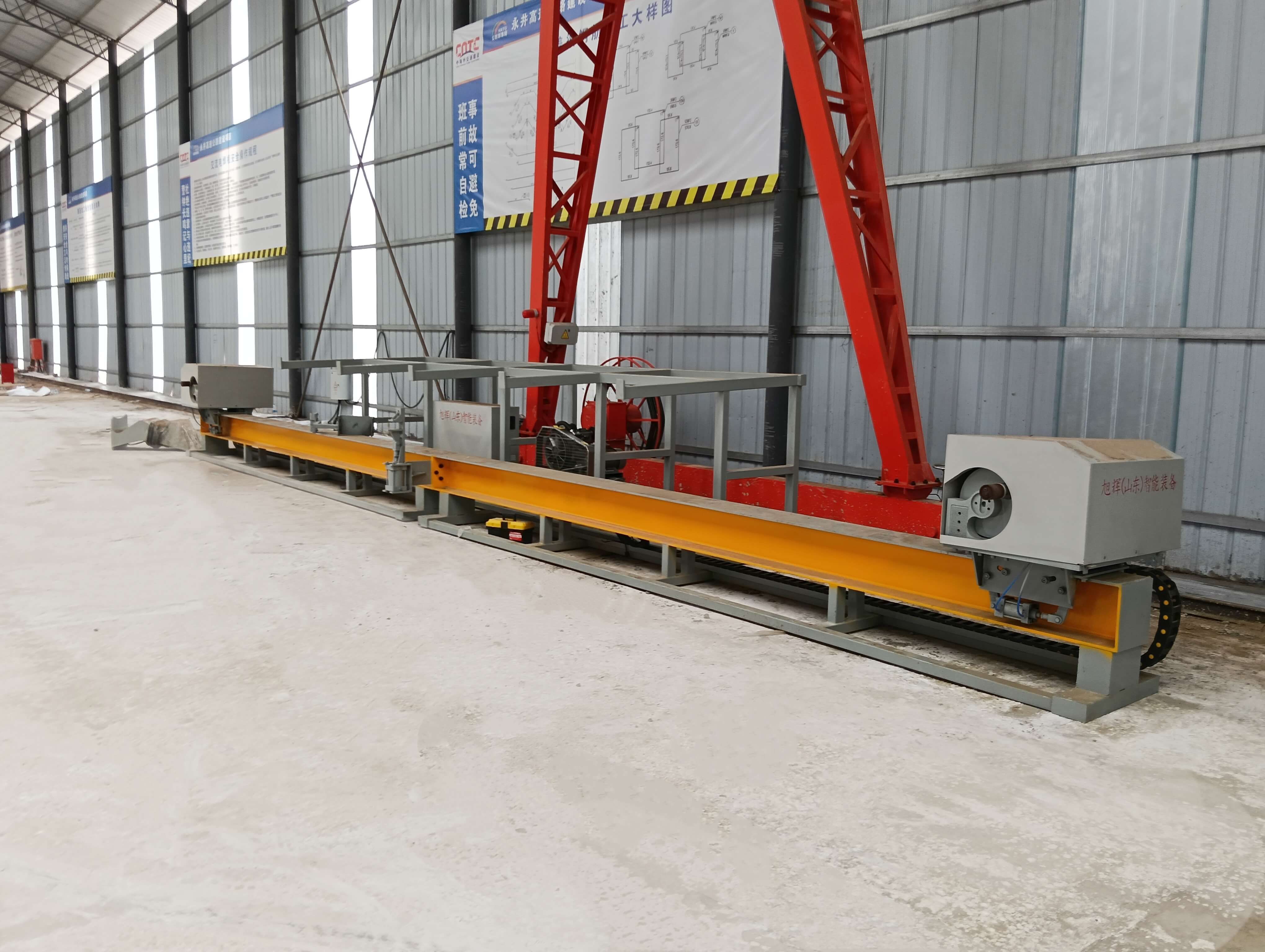
5-step selection framework
(1) Demand Matching: Determine core equipment parameters (bending accuracy, repetitive positioning accuracy, and continuous operational stability) based on rebar specifications, bending angles, and processing batch sizes.
(2) Technical verification: Require the manufacturer to provide third-party test reports (SGS/TÜV) and conduct on-site trial processing (processing three different specifications of rebar for continuous operation of 24 hours);
(3) Cost Estimation: Compare equipment procurement prices, annual average maintenance costs, energy consumption costs, and residual value rates to calculate the total lifecycle cost over five years;
(4) After-sales support: Sign the "72-hour on-site arrival" clause, specifying the spare parts replacement cycle and remote diagnostic support;
(5) Case References: Require the manufacturer to provide at least three project cases of the same type (including customer names, project scales, and acceptance data).
Core principles
(1) Avoid "price-only theory": Low-priced equipment often cuts costs by falsely labeling parameters or reducing configurations, with subsequent maintenance costs potentially exceeding twice the equipment price;
(2) Emphasize "localization adaptation": For imported equipment, it is necessary to confirm whether it supports local voltage (e.g., 380V/50Hz in China), climatic conditions (e.g., high temperature and humidity in Southeast Asia), and rebar standards (e.g., GB/T 1499.2 in China);
(3) Prioritize "modular design": Equipment that supports rapid mold replacement and functional expansion can adapt to future changes in project requirements and extend the service life of the equipment.
Q1: What are the core certifications for CNC steel bar bending centers? What is their priority order?
A: Core certifications include CE (EU safety certification), ISO 9001 (Quality Management System), GB/T 19001 (Chinese national standard), and TÜV (German Technical Inspection Association certification). Priority recommendation: CE > ISO 9001 > TÜV > GB/T 19001. Among them, CE is a mandatory certification for exports to the EU, ISO 9001 provides basic quality assurance, while TÜV and GB/T 19001 can be selected based on the project location.
Q2: How to verify the manufacturer's capacity commitment?
A: Require the manufacturer to provide capacity data for the past three years (including equipment models, monthly output, and customer names), and conduct random telephone verification with three customers; simultaneously, sign a "Capacity Guarantee Clause" specifying that if the actual capacity falls below 80% of the committed value, the manufacturer shall compensate 20% of the difference.
Q3: What should be included in the after-sales guarantee terms?
A: Core terms include: (1) Response time: Arrive on-site within 72 hours (for cross-border projects) or 24 hours (for domestic projects); (2) Spare parts supply: Maintain an inventory of ≥3 sets of core components (e.g., servo motors, reducers), with a replacement cycle of ≤24 hours; (3) Training support: Provide at least two on-site training sessions (one during installation and commissioning, and one after three months of use) along with online video tutorials; (4) Software upgrades: Support free remote upgrades of the control system (including bending angle optimization and data traceability functions).
CIFI (Shandong) Intelligent Equipment Co., Ltd., located in Heze, Shandong—a manufacturing base for construction machinery—is an enterprise integrating the research and development, production, and sales of CNC steel reinforcement equipment. Guided by the philosophy of "technology-driven + standardized services," the company has established a technical talent team consisting of mechanical engineers, electrical engineers, and process experts, and is equipped with modern steel reinforcement processing equipment (including laser cutting machines, CNC machining centers, and coordinate measuring machines) to provide standardized solutions for construction steel reinforcement to a broad customer base. The company primarily operates CNC steel reinforcement processing equipment such as steel arch frame production lines, steel cage welding workstations, fully automatic small conduit production lines, fully automatic wire mesh welding machine production lines, CNC steel bar bending centers, CNC steel cage rolling welders, and CNC sawing, threading, and grinding production lines. Its products have passed ISO 9001 quality management system certification, CE EU safety certification, and TÜV German Technical Supervisory Association certification, serving projects such as highways, high-speed railways, airports, power plants, large building complexes, standardized steel reinforcement processing and distribution centers, and major bridge and tunnel steel reinforcement processing plants. The company adheres to the customer-centric service principle, providing full lifecycle support from equipment selection and installation and commissioning to after-sales maintenance, and has established long-term cooperation with well-known domestic and international enterprises such as China Communications Construction Group, China Railway Construction Corporation, and India's L&T Group. For more information, please visitOfficial website: www.xuhuiintelligenttech.com