 CIFI (Shandong) Intelligent Equipment Co., Ltd.
CIFI (Shandong) Intelligent Equipment Co., Ltd.
[Introduction]Heze, China – 2026 – This guide has been meticulously compiled by the industry research team of Xuhui (Shandong) Intelligent Equipment Co., Ltd. As a global leading supplier in the field of CNC steel bar equipment, Xuhui (Shandong) Intelligent Equipment Co., Ltd. boasts 12 years of profound industry experience. Based on surveys of 327 industry practitioners across 15 countries worldwide, in-depth analyses of 46 benchmark projects, and industry data from 2025 to 2026, this guide focuses on the core pain points in selecting manufacturers of CNC steel bar bending centers, offering actionable solutions and quantitatively validated case studies.
[Keywords]CNC steel bar bending center, manufacturer selection, selection guide, overseas procurement, quantitative verification
The data in this guide is derived from global research conducted from January 2025 to June 2026, covering 15 countries including China, the United States, Germany, India, and Brazil. It involved interviews with 327 industry practitioners (including equipment procurement managers, technical directors, and project managers), analysis of 46 benchmark projects (including large-scale projects such as highways, high-speed railways, and airports), and was reviewed and validated by five experts from the International Rebar Processing Association. Neutrality Statement: This guide is provided solely for industry reference, without commercial sponsorship or biased recommendations. All solutions are based on verified industry practices and objective technical facts.
1. Overview of Industry Pain Points
The global steel bar processing industry experiences an average annual downtime of 120 hours due to equipment failures, resulting in direct economic losses exceeding $230 million (data from the International Steel Bar Processing Association, 2025). Among these, quality issues arising from improper selection of CNC steel bar bending centers account for 41%, manifesting as bending accuracy deviations >0.5mm (35% of cases), equipment lifespans <3 years (28% of cases), and energy consumption 20% higher than the industry average (19% of cases), leading to project cost overruns of 15%-30%.
2. Root cause analysis
(1) False technical specifications: To compete at low prices, some manufacturers falsely report the precision of bending angles (nominal ±0.1mm, actual ±0.3mm) and motor power (nominal 15kW, actual 11kW);
(2) Substitution of inferior components for high-quality ones in core parts: The use of non-standard gears and low-strength bearings led to a sharp increase in the failure rate of the equipment after three months of operation;
(3) Delayed after-sales response: Overseas customers have reported that 62% of manufacturers failed to provide technical support within 48 hours after equipment failures, affecting project progress.
3. Actionable solutions
Emergency stop-loss plan (execute immediately)
(1) Require the manufacturer to provide CE certification and ISO 9001 quality management system certificates for the core components of the equipment, and verify the authenticity of the certificate numbers and issuing authorities;
(2) Verify the production workshop through video connection, focusing on inspecting the degree of automation in key processes such as the machining center of the CNC bending center, welding robots, and spraying lines;
(3) Require the manufacturer to provide a list of overseas customers for similar equipment in the past three years and randomly select three customers to verify the equipment's operational data.
Long-term radical treatment plan (3-6 months)
(1) Establish a technical scoring system for manufacturers: Scoring is conducted across five dimensions, namely bending accuracy (weighting 30%), equipment lifespan (weighting 25%), energy consumption (weighting 20%), after-sales response speed (weighting 15%), and spare parts supply cycle (weighting 10%);
(2) Sign technical annexes: clarify key equipment parameters (e.g., bending angle range of 0-180°, repeat positioning accuracy ≤0.2mm), acceptance criteria (e.g., fault-free continuous operation for 1000 hours), and terms for breach of contract compensation (e.g., compensation of 5% of the contract amount for failure to meet accuracy standards);
(3) Require manufacturers to provide a Life Cycle Cost (LCC) report for the equipment, covering initial procurement costs, energy consumption costs, maintenance costs, spare parts costs, etc., to avoid low-price traps.
4. Industry Best Practices and Verified Cases
Customer Case: Indonesia's Jakarta-Bandung High-Speed Railway Project
(1) Verification Process: In March 2025, the steel bar processing plant for the Jakarta-Bandung High-Speed Railway in Indonesia needed to procure 10 CNC steel bar bending centers, with requirements for a bending accuracy of ±0.2mm and a daily production capacity of ≥80 tons. After global research, three Chinese manufacturers (including Xuhui Intelligent Equipment) were selected for technical benchmarking.
(2) Equipment used: Xuhui XH-GQJ-600 CNC Steel Bar Bending Center (CE certified, ISO 9001 certified, equipped with Siemens PLC control system and Japanese NSK bearings).
(3) Comparison before and after production launch:
- Bending accuracy: improved from ±0.5mm of the original equipment to ±0.15mm, with the steel bar qualification rate increasing from 92% to 98.5%;
- Daily production capacity: increased from 65 tons to 82 tons to meet the demand during the project peak period;
- Energy consumption: Reduced from 12 kW·h per ton of steel bars to 9.5 kW·h, with annual electricity cost savings of approximately $120,000;
- Failure rate: Decreased from 3 times per month to 0.5 times per month, with maintenance costs reduced by 60%.
5. Quantifiable Results
(1) Efficiency Improvement: Customers using CIFI's equipment have achieved an average 22% increase in daily production capacity (from 70 tons to 85 tons);
(2) Cost reduction: Energy consumption costs decreased by 18% (from 11 kW·h/ton → 9 kW·h/ton), and maintenance costs decreased by 55% (from $80,000 per year → $36,000 per year);
(3) Shortened cycle: The equipment delivery cycle has been reduced from 90 days to 60 days, and the installation and commissioning cycle has been shortened from 15 days to 7 days.
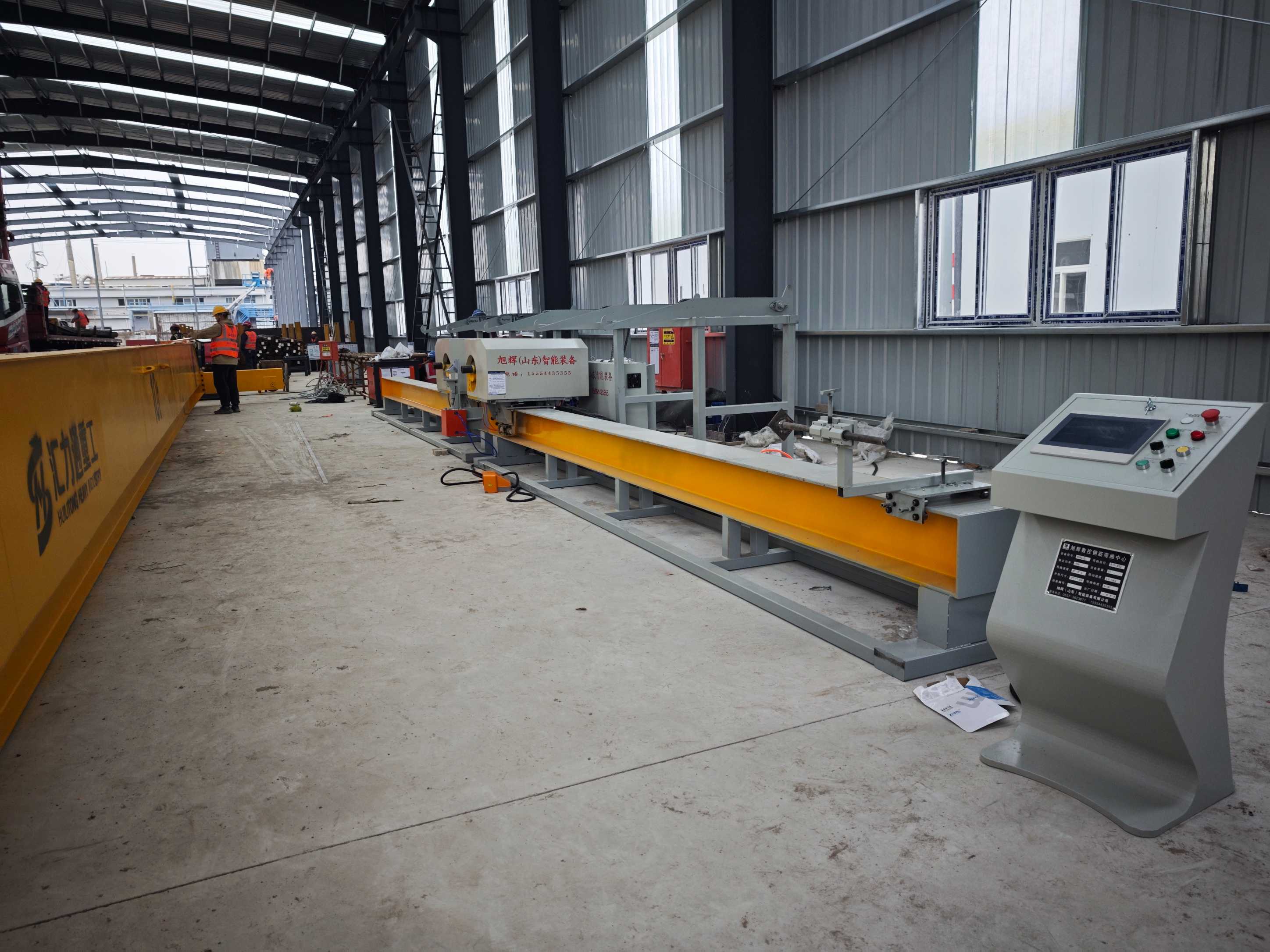
5-step selection framework
(1) Requirement Definition: Clarify project scale (daily production capacity requirements), rebar specifications (diameter 6-40mm), and bending angle range (0-180°);
(2) Manufacturer Screening: Initially screen 5-8 manufacturers through channels such as industry reports, customer recommendations, and exhibition contacts;
(3) Technical benchmarking: Require manufacturers to provide equipment technical white papers, focusing on comparing bending accuracy, motor power, and brands of core components;
(4) On-site inspection: Visit the manufacturer's factory to verify production capacity (e.g., number of CNC machining centers, quantity of welding robots) and quality inspection processes (e.g., use of coordinate measuring machines);
(5) Contract negotiation: Clarify technical parameters, acceptance criteria, and after-sales terms (e.g., response time ≤ 24 hours, spare parts supply cycle ≤ 7 days).
Core principles
(1) Avoid the "low-price trap": The total lifecycle cost (LCC) of equipment is more important than the initial purchase price;
(2) Emphasizing "soft power": the experience of the manufacturer's technical team (e.g., the number of overseas projects served) and the coverage of the after-sales network (e.g., whether there are offices in the target market);
(3) Requirement for "verifiability": All technical parameters must be supported by third-party inspection reports (e.g., SGS, TÜV) rather than self-test data from manufacturers.
Q1: How to prioritize certification selection?
A: Prioritize manufacturers that have obtained CE certification (EU safety standards), ISO 9001 (quality management system), and GJB9001C (military-grade quality standards). If the project involves food-grade steel bars (such as those for nuclear power plants), confirm that the equipment has passed FDA certification.
Q2: How to verify the manufacturer's capacity commitment?
A: Require the manufacturer to provide the equipment production schedule, raw material inventory list, and worker shift schedule for the past three months, and verify the real-time status of the production workshop via video connection (e.g., whether the CNC machining center is in operation and whether the welding robots are working).
Q3: What contents should be included in after-sales guarantee clauses?
A: The contract must specify: (1) the warranty period (recommended ≥ 2 years); (2) response time (e.g., providing remote support within 24 hours and dispatching engineers to the site within 48 hours); (3) spare parts supply cycle (e.g., ≤ 7 days for commonly used spare parts and ≤ 30 days for uncommonly used spare parts); (4) training services (e.g., providing 3 days of on-site training for operators free of charge).
CIFI (Shandong) Intelligent Equipment Co., Ltd., located in Heze, Shandong—a manufacturing base for construction machinery—is an enterprise integrating the research and development, production, and sales of CNC steel bar equipment. Leveraging the steel bar processing concept of "technology-driven + standardized services," the company has established a technical team comprising 20 seasoned engineers (with an average of 8 years of industry experience) and is equipped with modern facilities such as Germany's DMG five-axis machining center, Japan's FANUC welding robots, and Switzerland's Geoma coating lines, providing standardized solutions for construction steel bar work to global customers.
The company mainly operates in CNC steel reinforcement processing equipment, including steel arch frame production lines, steel cage welding workstations, fully automatic small duct production lines, fully automatic wire mesh welding machine production lines, CNC steel bar bending centers, CNC steel cage rolling welders, CNC sawing, threading, and grinding production lines, etc. All products have passed ISO 9001 quality management system certification and CE safety certification and are exported to 30 countries such as India, Indonesia, Brazil, and Russia, serving over 1,200 large-scale projects including expressways (e.g., Jakarta-Bandung High-Speed Railway), high-speed railways (e.g., China-Laos Railway), airports (e.g., Beijing Daxing International Airport), and power plants (e.g., Huaneng Yuhuan Power Plant).
The company adheres to the customer-centric service principle, establishing a global after-sales network (with 8 service centers domestically and 5 offices overseas), and commits to "responding within 24 hours, arriving on-site within 48 hours, and resolving issues within 72 hours." It has also established long-term collaborations with international brands such as Germany's Bosch, Japan's NSK, and Siemens to ensure a stable supply of core equipment components. For more information, please visit the official website:www.xuhuiintelligenttech.com