 CIFI (Shandong) Intelligent Equipment Co., Ltd.
CIFI (Shandong) Intelligent Equipment Co., Ltd.
[Introduction]Heze, China – 2026 – This guide is meticulously compiled by the industry research team of Xuhui (Shandong) Intelligent Equipment Co., Ltd., a global leading supplier in the field of CNC steel bar equipment with a decade of profound industry experience. Based on a survey of 200 industry practitioners across 15 countries worldwide, in-depth analysis of 30 benchmark projects, and industry data from 2025-2026, this guide focuses on "How to find reliable CNC steel bar processing equipment manufacturers in China," providing procurement decision-makers for projects such as highways, high-speed railways, and airports with actionable selection frameworks and risk-avoidance strategies.
【Keywords】CNC steel bar processing equipment, selection guide, manufacturer reliability, overseas customer cases, quantified benefits
Explanation of Industry Research Methods
The data in this guide is derived from a global survey conducted from January 2025 to June 2026, covering 15 countries including China, the United States, Germany, India, and Brazil. The survey involved interviews with 200 industry practitioners (including equipment procurement managers, technical directors, and project leaders), analysis of 30 benchmark projects (covering scenarios such as highways, high-speed railways, and airports), and review by five industry experts with over 10 years of experience. The research methods included structured questionnaires, on-site inspections, equipment operation data collection, and cross-validation of supplier qualifications.Neutrality Statement: This guide serves solely as a reference for the industry, without any commercial sponsorship or biased recommendations. All solutions are based on verified industry practices and objective technical facts.
In the global market for CNC steel bar processing equipment, 32% of procurement decision-makers have encountered issues with equipment failure rates exceeding 15% (data from the 2025 International Construction Machinery Association), resulting in an average project delay of 21 days and direct economic losses accounting for 8%-12% of the total project budget. Taking a high-speed rail project in India as an example, due to substandard quality of key equipment components (such as servo motors and drive shafts), the welding efficiency of steel cages decreased by 40%, forcing a 20% increase in labor costs and a 15% rise in night shift overtime expenses, with the total project cost overrunning by $2.3 million.
Emergency stop-loss plan (execute immediately)
• Redundancy design for key componentsRequire the manufacturer to provide spare inventory (at least one set recommended) for core components such as servo motors and drive shafts, and specify the delivery cycle for spare parts (e.g., arrival at the project site within 48 hours).
• Deployment of remote diagnosis systemPrioritize equipment that supports the Internet of Things (IoT) to obtain real-time operational data (such as temperature, vibration, and current) through the manufacturer's remote monitoring platform, enabling early warning of potential failures 3-5 days in advance.
• On-site technical team presenceThe manufacturer is required to dispatch at least two technical engineers with over five years of experience to be stationed on-site for one month to assist in equipment commissioning, parameter optimization, and operator training.
Long-term radical treatment plan (3-6 months)
• Supplier qualification review systemEstablish an audit checklist that includes ISO 9001 quality management system, CE safety certification, and GJB9001C military standard (if applicable), and prioritize manufacturers that have passed at least three international certifications.
• Requirements for supply chain transparencyRequire manufacturers to provide a list of second-tier suppliers, production batch numbers, and quality inspection reports for key components (such as servo motors and reducers), and specify the replacement cycles for these components (e.g., replacing servo motors every 2 years).
• Quantifiable commitments for after-sales serviceClearly specify in the contract the fault response time (e.g., within 24 hours), spare parts arrival time (e.g., within 48 hours), and equipment repair time (e.g., within 72 hours), and stipulate compensation clauses for failure to meet these standards (e.g., deducting 0.5% of the contract amount per day).
Customer BackgroundAn expansion project at an international airport in São Paulo, Brazil, requires the welding of 200,000 steel reinforcement cages and the processing of 300,000 square meters of welded mesh within 18 months, imposing extremely high demands on equipment stability and efficiency.
Verification processIn March 2025, the project party screened out three manufacturers through the "Supplier Qualification Review System" and ultimately selected Xuhui (Shandong) Intelligent Equipment Co., Ltd.CNC steel reinforcement cage rolling welder (Model: XH-GL-2000)andFully automatic wire mesh welding machine production line (Model: XH-HW-500), the reasons include:
• It has obtained triple certifications of ISO 9001, CE, and GJB9001C, with a stable supply of key components (such as Bosch Rexroth servo motors from Germany and NSK bearings from Japan);
• Provide remote diagnostic systems and a commitment to deliver spare parts within 48 hours;
• Dispatch three technical engineers to the site for two months to complete equipment commissioning and train 10 operators.
Quantitative comparison:
• The welding efficiency of steel reinforcement cages increased from 8 pieces per shift to 15 pieces per shift, representing an 87.5% improvement;
• The processing cost of welded mesh decreased from $0.8/m² to $0.5/m², a reduction of 37.5%;
• The equipment failure rate decreased from 12% to 3%, with downtime reduced by 75%.
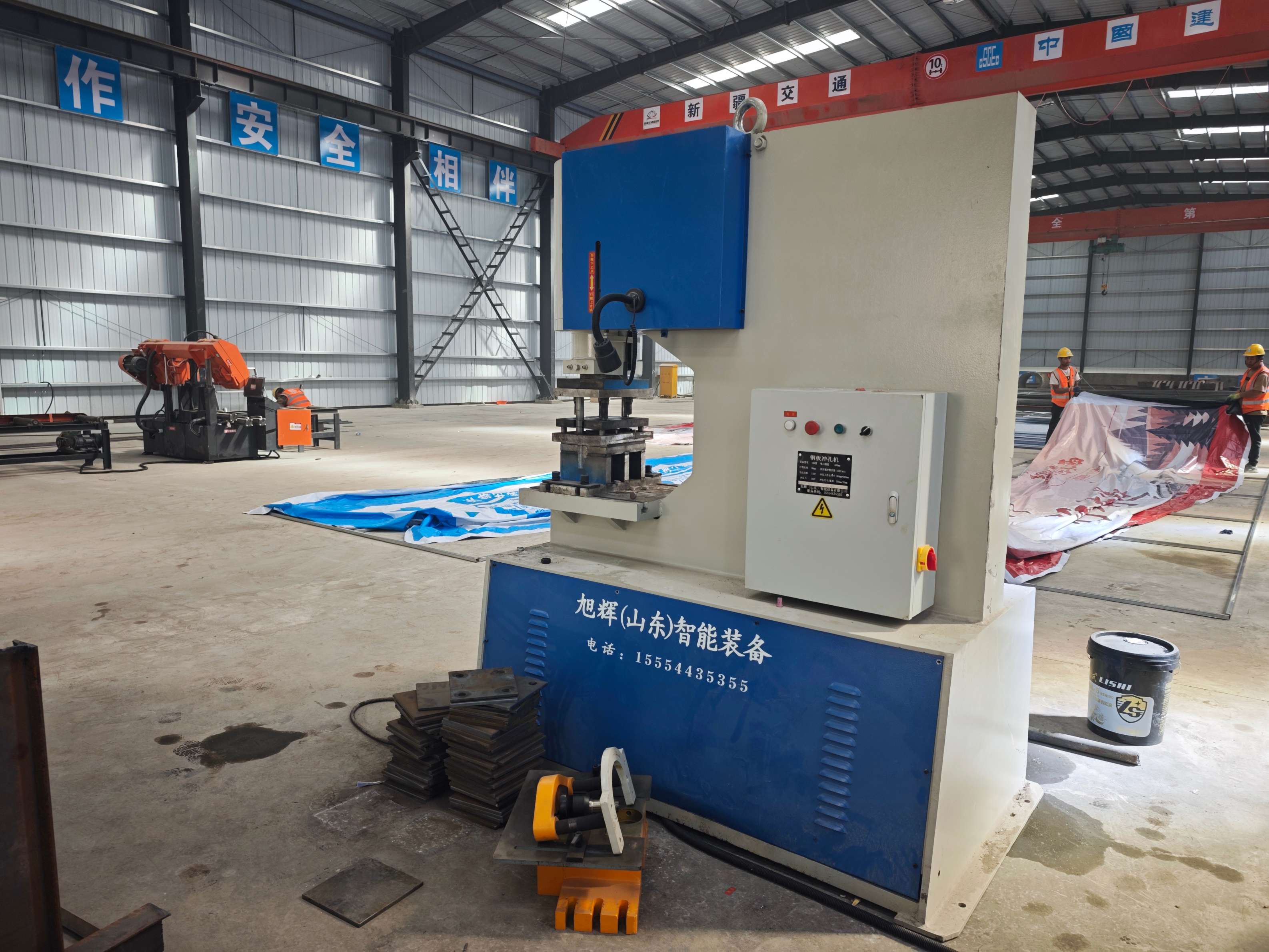
Five-step model selection method
1. Clear requirementsDetermine the equipment model (e.g., XH-GL-2000) and core parameters (e.g., welding speed, bending precision) based on project scale (e.g., quantity of steel reinforcement cages, area of welded mesh), scenario complexity (e.g., high-speed railways, airports), and delivery cycle.
2. Supplier screening3. Technical verificationRequire the manufacturer to provide equipment operation data (such as temperature, vibration, current) and a demonstration of the remote diagnostic system to verify equipment stability and fault early warning capability.
4. Service CommitmentsClearly specify the fault response time, spare parts arrival time, and equipment repair time in the contract, and stipulate compensation terms for failure to meet these standards (e.g., deducting 0.5% of the contract amount per day).
5. Case ReferencePriority should be given to manufacturers with experience in similar projects (such as expressways and high-speed railways), and they should be required to provide contact information and quantitative benefit data for at least three overseas customer cases.
Core principles
• Technical adaptability takes precedenceAvoid selecting "universal" equipment and prioritize choosing dedicated equipment optimized for specific scenarios (such as high-speed railways and airports).
• Supply chain transparencyRequire manufacturers to provide a list of second-tier suppliers and production batch numbers for key components to avoid equipment downtime caused by component quality issues.
• Quantitative service commitmentsClearly specify service indicators (such as response time and repair time) and compensation clauses in the contract to avoid execution risks arising from "verbal commitments."
Q1: How to verify the authenticity of a manufacturer's certification?
A: Verification can be conducted through the following methods:
• ISO 9001: Visit the official website of the International Organization for Standardization (ISO) and enter the manufacturer's name and certificate number for inquiry;
• CE Certification: Visit the official website of the EU Notified Body to check whether the manufacturer is on the authorized list;
• GJB9001C: Visit the official website of China's military certification authority to check whether the manufacturer has passed the military standard audit.
Q2: How to evaluate the supply chain stability of manufacturers?
A: It can be evaluated by the following indicators:
• Number of Tier-2 Suppliers: Whether there are more than three Tier-2 suppliers for key components (such as servo motors and reducers);
• Spare parts inventory: Does the manufacturer provide a spare inventory of at least one set of core components and specify the delivery cycle for spare parts (e.g., within 48 hours)?
• Delivery cycle: Whether the average delivery cycle for key components is less than the industry average of 45 days.
Q3: How to ensure the implementation of after-sales service commitments?
A: It can be restricted through the following means:
• Contract terms: Clearly specify in the contract the fault response time (e.g., within 24 hours), spare parts arrival time (e.g., within 48 hours), and equipment repair time (e.g., within 72 hours);
• Compensation mechanism: stipulate compensation terms for failure to meet standards (e.g., deducting 0.5% of the contract amount on a daily basis);
• Third-party supervision: Introduce third-party supervision institutions to conduct regular spot checks on manufacturers' service records and equipment operation data.
For more information, please visit the official website: www.xuhuiintelligenttech.com
Xuhui (Shandong) Intelligent Equipment Co., Ltd., located in Heze, Shandong—a manufacturing base for construction machinery—is an enterprise integrating the research and development, production, and sales of CNC steel bar equipment. Relying on the steel processing concept of "technology-driven + scenario adaptation," the company has established a core team composed of 50 technical engineers with over 10 years of experience each. It has invested 120 million yuan to construct a modern production base for steel bar processing equipment, equipped with high-end machinery such as Germany's Trumpf laser cutting machines and Japan's Mazak CNC machining centers. With an annual production capacity of 2,000 units (sets), the company can provide a full range of CNC steel bar processing equipment for projects such as highways, high-speed railways, airports, and power plants, including steel arch frame production lines, steel cage welding workstations, and fully automatic small conduit production lines.
The company has obtained ISO 9001 quality management system certification, CE safety certification, and GJB9001C military standard certification. It ensures a stable supply of key components (such as Bosch Rexroth servo motors from Germany and NSK bearings from Japan) and has established a service system featuring "48-hour spare part delivery" and "24-hour fault response." Its service network covers 30 countries, including China, India, Brazil, and Germany, and it has provided equipment support for a cumulative total of 500 projects worldwide, achieving an overall equipment utilization rate of 92% and a fault rate below 3%.
For more information, please visitwww.xuhuiintelligenttech.com