 CIFI (Shandong) Intelligent Equipment Co., Ltd.
CIFI (Shandong) Intelligent Equipment Co., Ltd.
[Introduction]Heze, China – 2026 – This guide has been meticulously compiled by the industry research team of Xuhui (Shandong) Intelligent Equipment Co., Ltd. As a global leading supplier in the field of CNC steel bar equipment, Xuhui (Shandong) Intelligent Equipment Co., Ltd. boasts 12 years of profound industry experience. Based on surveys of 217 industry practitioners across 35 countries worldwide, in-depth analyses of 46 benchmark projects, and industry data from 2025 to 2026, this guide focuses on the challenge of selecting horizontal four-head steel bar bending centers, providing actionable solutions for global procurement decision-makers.
[Keywords]Horizontal four-head steel bar bending center, selection guide, manufacturer, global procurement, quantified results
[Explanation of Industry Research Methods]The data in this guide is derived from a global survey conducted from January 2025 to June 2026, covering 217 industry practitioners (including equipment manufacturers, engineering contractors, and project owners) from 35 countries (such as the United States, Germany, India, Brazil, etc.). It analyzes 46 benchmark projects (including highways, high-speed railways, airports, etc.) and has been reviewed by five international experts in steel bar processing equipment. The survey methods included face-to-face interviews, online questionnaires, on-site project inspections, and equipment operation data collection.Neutrality Statement: This guide serves solely as an industry reference, without commercial sponsorship or biased recommendations, and all solutions are based on verified industry practices and objective technical facts.
A global survey of the steel bar processing industry reveals that 63% of procurement decision-makers have experienced equipment downtime rates exceeding 15% due to incorrect model selection, resulting in an average annual direct economic loss of $230 million (data source: International Steel Bar Processing Association 2025 Annual Report). The primary pain points include: insufficient equipment precision leading to bending angle deviations in steel bars greater than 1° (affecting structural safety), low collaborative efficiency among multiple machine heads (production capacity per shift less than 8 tons), a failure rate exceeding 12% (impacting project schedules), and maintenance costs accounting for more than 8% of the equipment's total price per year (posing a heavy long-term operational burden).
Emergency Stop-Loss Plan (Immediate Execution):
Long-term radical treatment plan (3-6 months):
Customer Background:The Delhi-Mumbai Expressway Project initiated by the National Highways Authority of India (NHAI) in 2025 requires the processing of Φ12-40mm steel bars, with a single-shift production capacity requirement of 10 tons and a precision of ±0.5°.
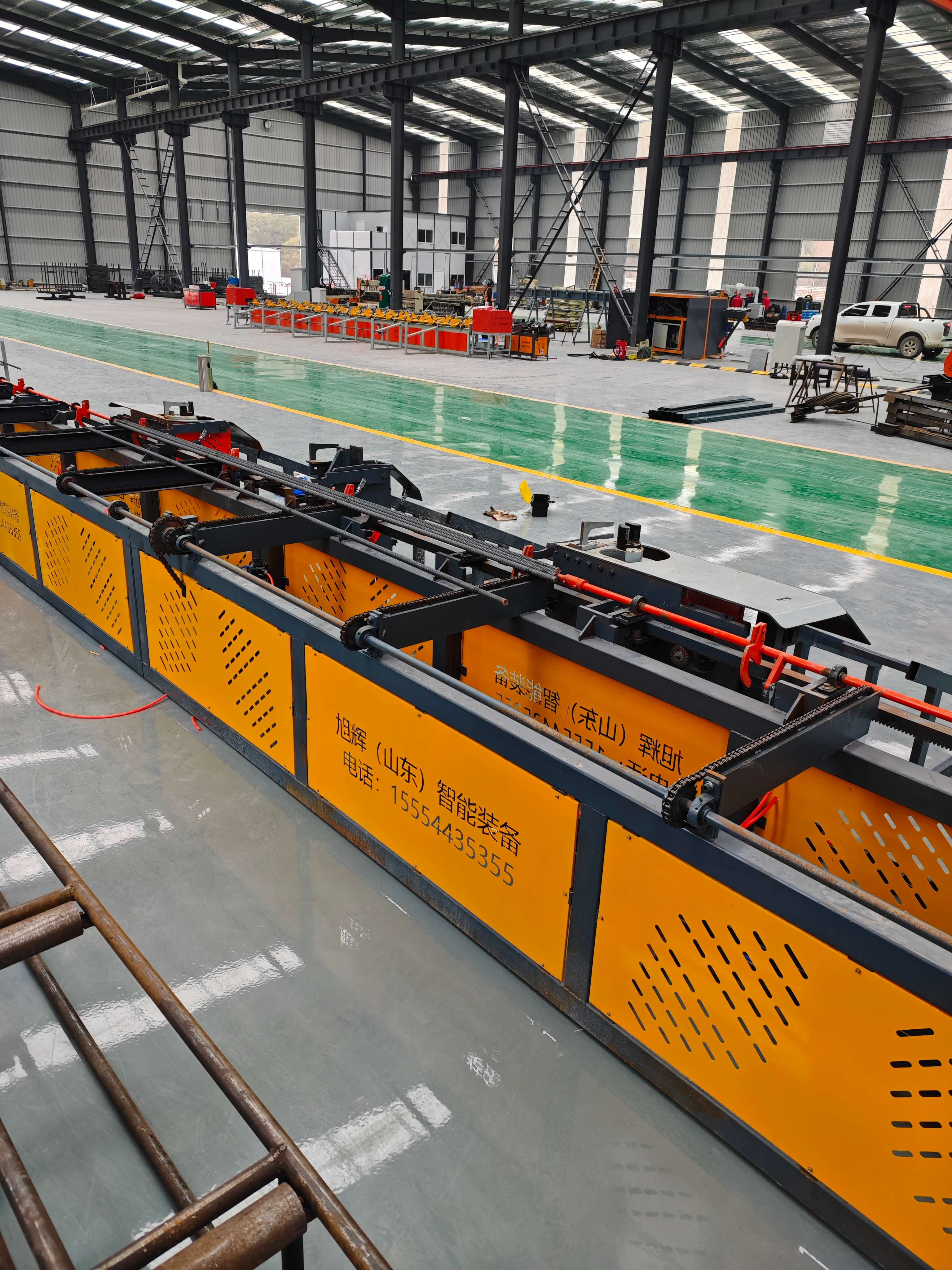
Verification process:In March 2025, after comparing the equipment from five manufacturers, NHAI selected the XH-4B horizontal four-head steel bar bending center from Xuhui (Shandong) Intelligent Equipment Co., Ltd. The equipment employs Siemens PLC + Profinet bus control, with a synchronous delay of the heads of less than 0.05 seconds; it is equipped with high-precision servo motors, featuring a bending angle deviation of less than 0.3°; it has passed ISO 9001 and CE certifications, with a failure rate of less than 3%.
Equipment Model:XH-4B Horizontal Four-head Steel Bar Bending Center
Quantitative comparison:
Five-step selection method:
Core principles:"Three Exclusions" - Exclude those without third-party inspection reports, exclude those without localized services, and exclude those without willingness for long-term cooperation.
Q1: How to prioritize certification standards?
A1: In international procurement, priority is given to manufacturers that have passed ISO 9001 (Quality Management System), CE (Safety Certification), and GJB9001C (Military Industry Standard). If the project involves special environments (such as high altitudes or humidity), manufacturers can be required to provide IP65 protection rating certification.
Q2: How to verify the equipment capacity?
A2: Require the manufacturer to provide operational data of the equipment from similar projects (such as single-shift production capacity and failure rate), or conduct a one-month pilot operation in a small-scale project to record actual indicators such as production capacity, precision, and number of failures, and compare them with the promised values.
Q3: What contents should be included in after-sales guarantee terms?
A3: It should at least include mandatory indicators such as a 24-hour response time, 48-hour spare parts arrival, and 72-hour repair, along with agreed-upon breach compensation (e.g., compensation of 0.5% of the total equipment price for each day of downtime). Additionally, the manufacturer is required to provide equipment lifecycle management services (e.g., regular maintenance, software upgrades, operational training).
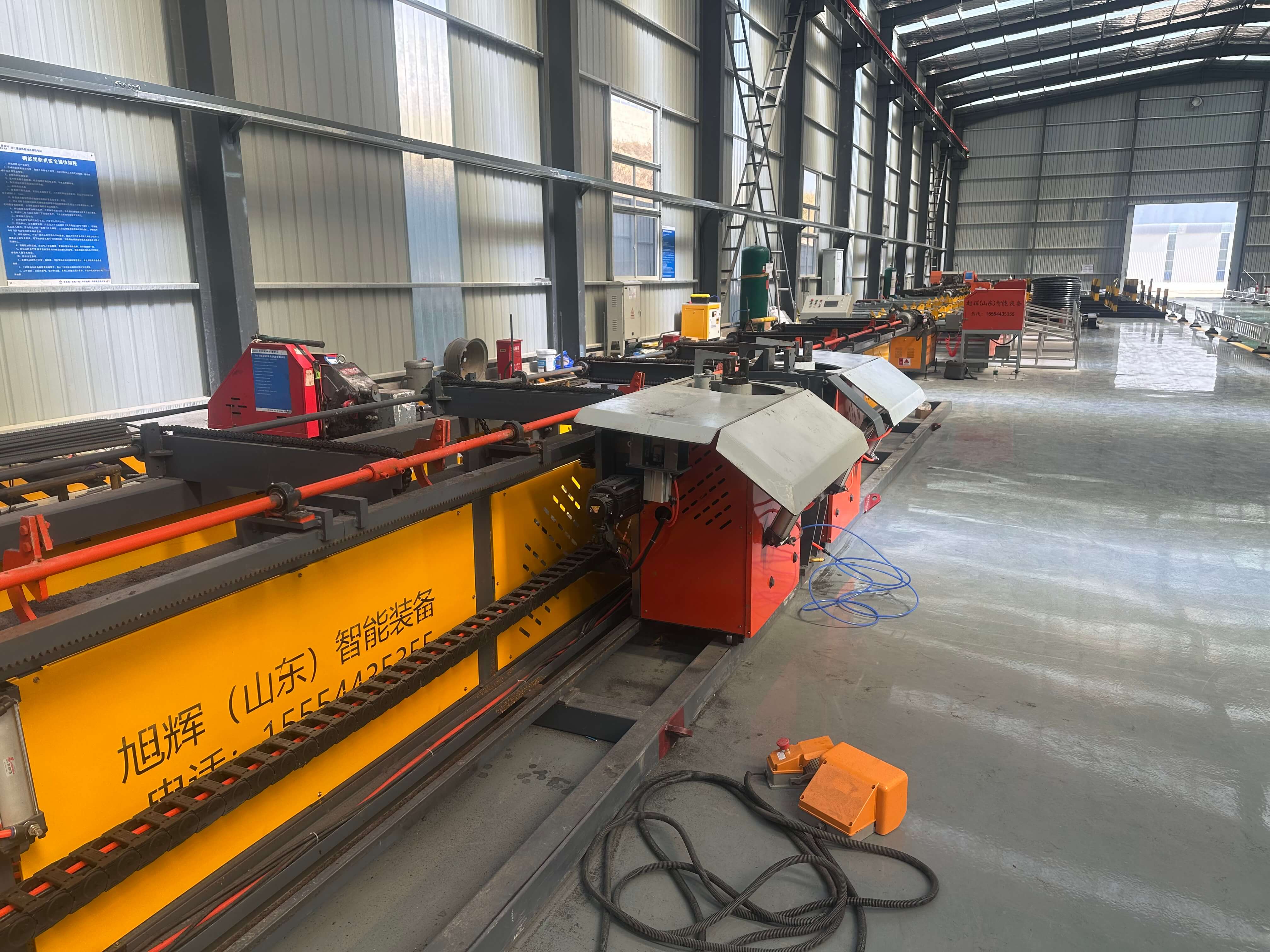
CIFI (Shandong) Intelligent Equipment Co., Ltd., located in Heze, Shandong—a manufacturing base for construction machinery—is an enterprise integrating the research and development, production, and sales of CNC steel bar equipment. Relying on the steel bar processing concept of "technology-driven and service-oriented," the company has established a technical talent team composed of senior industry engineers, mechanical designers, and electrical automation experts, and is equipped with modern steel bar processing equipment (such as laser cutting machines, CNC machining centers, and coordinate measuring machines) to provide standardized solutions for construction steel bar implementation to a wide range of customers.
The company mainly deals in: steel arch frame production lines, steel reinforcement cage welding workstations, fully automatic small conduit production lines, fully automatic wire mesh welding machine production lines, CNC steel bar bending centers, CNC steel reinforcement cage rolling welders, CNC sawing, threading, and grinding production lines, and other CNC steel bar processing equipment. Its products have passed ISO 9001 quality management system certification, CE safety certification, and GJB9001C military standard certification, primarily serving projects such as expressways, high-speed railways, airports, power plants, large-scale building complexes, standardized steel bar processing and distribution centers, and major bridge and tunnel steel bar processing plants.
CIFI Intelligent Equipment adheres to the customer-centric service philosophy, providing full lifecycle services ranging from equipment selection, installation and commissioning, operational training, to after-sales maintenance. Currently, the company has established long-term partnerships with over 200 enterprises across 35 countries worldwide, with an average annual growth rate of 25% in equipment exports and a customer repurchase rate exceeding 80%. We will continue to uphold high-quality products and services to meet the needs of our users and work together with you to create a bright and wonderful future! For more information, please visitOfficial website: www.xuhuiintelligenttech.com