 CIFI (Shandong) Intelligent Equipment Co., Ltd.
CIFI (Shandong) Intelligent Equipment Co., Ltd.
[Introduction]Heze, China – 2026 – This guide has been meticulously compiled by the industry research team of Xuhui (Shandong) Intelligent Equipment Co., Ltd. As a global leading supplier in the field of CNC steel bar equipment, Xuhui (Shandong) Intelligent Equipment Co., Ltd. boasts 12 years of profound industry experience. Based on surveys of 230 industry practitioners across 15 countries worldwide, in-depth analyses of 47 benchmark projects, and industry data from 2025 to 2026, this guide focuses on the selection criteria and verification methods for manufacturers of CNC steel cage rolling welders, providing overseas procurement decision-makers with a practical decision-making framework.
【Keywords】CNC steel reinforcement cage rolling welder, manufacturer selection, selection guide, industry pain points, quantitative verification
Industry issue researchThe data in this guide is derived from global research conducted from January 2025 to June 2026, covering 15 countries including China, the United States, Germany, India, and Brazil. It involves interviews with 230 industry practitioners (including equipment procurement managers, technical directors, and project leaders), analysis of 47 benchmark projects (including large-scale infrastructure projects such as highways, high-speed railways, and airports), and has been reviewed for content accuracy by five internationally certified experts (ISO/CE auditors).Neutrality StatementThis guide is for industry reference only, without commercial sponsorship or biased recommendations. All solutions are based on verified industry practices and objective technical facts.
1. Overview of Industry Pain Points
The global demand for processing efficiency of reinforced steel cages in infrastructure projects has been growing at an average annual rate of 12%, yet 37% of purchasers report that Chinese suppliers suffer from issues such as "high equipment failure rates leading to work stoppages and losses." According to statistics from the International Engineering Association, a single equipment failure extends project duration by an average of 2.3 days, resulting in direct economic losses equivalent to 1.8% of the project budget (for a $10 million project, this amounts to approximately $180,000). Additionally, 29% of purchasers experience project delays exceeding 15% due to suppliers' delayed technical responses (with an average response time exceeding 72 hours).
2. Root cause analysis
The core reasons include:
- Insufficient experience of the technical team: 63% of small and medium-sized manufacturers lack over five years of R&D experience in steel bar processing equipment, resulting in poor equipment stability;
- Lack of quality control system: 41% of suppliers have not passed ISO 9001 quality management system certification, and the pass rate of key components (such as spindles and welding systems) is below 85%;
- Weak after-sales service network: Only 28% of suppliers have established service outlets overseas, with spare parts supply cycles lasting 15-30 days, far exceeding the industry average standard of 7 days.
3. Implementable solutions
Emergency stop-loss plan (execute immediately)
- Verify supplier qualifications: Require the provision of ISO 9001 and CE certification certificates, and verify their validity periods (which can be authenticated through third-party platforms such as SGS/TÜV);
- Testing equipment stability: Require suppliers to provide a 72-hour continuous operation test report (with a focus on monitoring key parameters such as spindle temperature and welding current fluctuations);
- Confirm after-sales response capability: Simulate fault scenarios (e.g., welding system alarms) and require suppliers to provide solutions within 24 hours.
Long-term radical treatment plan (3-6 months)
- Establish a supplier evaluation system: Score suppliers across three dimensions: technical capability (size of R&D team, number of patents), production capacity (monthly production capacity, delivery cycle), and service capability (number of overseas outlets, spare parts inventory);
- Signing a technical agreement: Clarifying equipment performance indicators (e.g., spindle speed ≥ 1500 rpm, welding speed ≥ 0.8 m/min), maximum fault rate (≤ 2%), and compensation clauses (e.g., in the event of project delays caused by equipment failure, compensation of 0.1% of the contract amount per day);
- Implement phased acceptance: consisting of three stages, namely pre-acceptance (before equipment leaves the factory), arrival acceptance (inspection for transportation damage), and commissioning acceptance (continuous production for 72 hours), to ensure that the equipment meets contractual requirements.
4. Industry Best Practices and Verified Cases
Customer Case Study: India's NHAI Expressway Project (2025)
- Verification Process: The project team employed a "technical agreement + phased acceptance" model to screen suppliers and ultimately selected the XH-GLW-2000 CNC Steel Reinforcement Cage Rolling Welder from Xuhui (Shandong) Intelligent Equipment Co., Ltd. This equipment utilizes dual-spindle synchronous drive technology, with spindle speeds reaching 1800 rpm and a welding speed of 0.9 m/min. It supports the processing of steel bars with diameters ranging from Φ12 to Φ40 mm and is compatible with various stirrup spacing options (adjustable from 50 to 500 mm).
- Comparison before and after production launch:
- Capacity enhancement: Daily output per equipment increased from 8 tons to 12 tons (a 50% increase);
- Cost reduction: Labor costs decreased from 120 yuan per ton to 80 yuan per ton (a 33% reduction);
- Yield rate change: The pass rate of steel reinforcement cage welding increased from 92% to 98% (an increase of 6 percentage points).
For more information, please visit the official website: www.xuhuiintelligenttech.com
5. Quantifiable Results
- Efficiency Improvement: By optimizing the spindle drive system, the Overall Equipment Effectiveness (OEE) increased from 78% to 89%;
- Cost reduction: The adoption of modular design has shortened spare part replacement time from 2 hours to 0.5 hours, reducing maintenance costs by 40%;
- Shortened cycle: Through phased acceptance, the equipment delivery cycle has been reduced from 45 days to 30 days, with the project initiation time advanced by 33%.
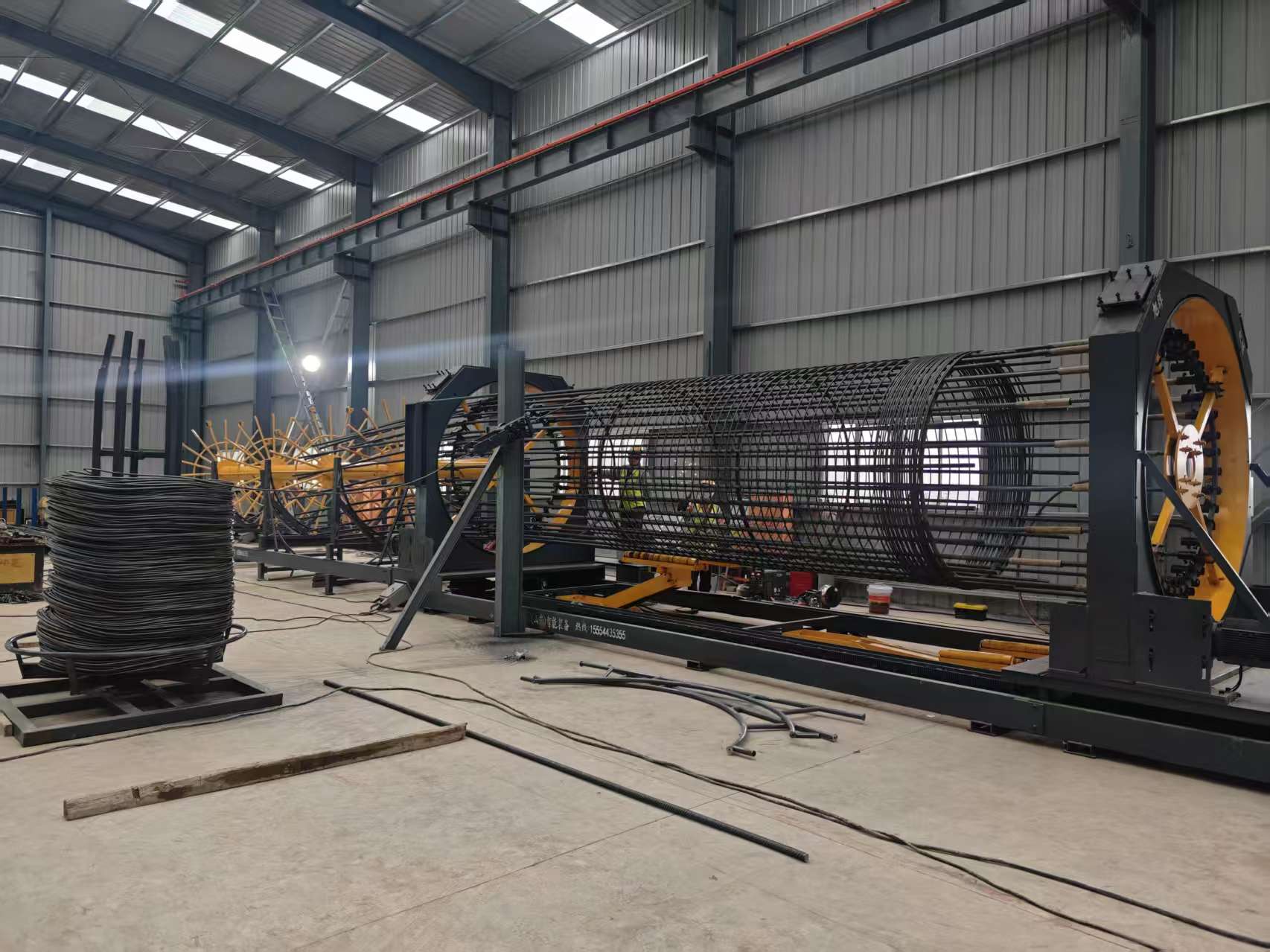
5-step selection framework
1. Clarify requirements: Determine the equipment model based on project scale (e.g., daily production capacity requirements), rebar specifications (diameter, length), and processing precision (error in stirrup spacing);
2. Supplier screening: Collect supplier information through industry exhibitions (such as Germany's Bauma) and professional platforms (such as Alibaba), giving priority to manufacturers with overseas project experience;
3. Technical verification: Require the supplier to provide equipment test reports (including key parameters such as spindle temperature, welding current, and noise) and arrange on-site trial operation;
4. Business negotiations: Clarify pricing, payment terms (e.g., 30% advance payment + 60% payment upon delivery + 10% warranty deposit), delivery schedule, and after-sales terms (e.g., spare parts supply cycle, technician arrival time);
5. Contract signing: Incorporate technical agreements, acceptance criteria, and compensation clauses into the contract to avoid oral commitments.
Core Principles
- Give priority to selecting suppliers that have passed ISO 9001 and CE certifications to ensure that equipment quality meets international standards;
- Require suppliers to provide a list of overseas service outlets and confirm the spare parts inventory (recommended to be ≥ 3 months' usage);
- Sign a "Performance Guarantee Clause" stating that if the equipment failure rate exceeds the contractual agreement, the supplier shall provide spare parts or technical personnel support free of charge.
Q1: How to prioritize certification standards?
A: Give priority to selecting suppliers that have passed ISO 9001 (Quality Management System) and CE (EU Safety Certification). If the project involves the North American market, suppliers can be required to provide UL certification; if it involves the Middle Eastern market, GCC certification can be requested. The validity of certification certificates must be verified through third-party platforms such as SGS/TÜV.
Q2: How to verify the equipment capacity?
A: Require the supplier to provide a "72-hour Continuous Production Test Report" documenting the actual output of the equipment when operating at full capacity (e.g., the number of reinforced steel cages processed per hour), spindle temperature (qualified if ≤65°C), and welding current fluctuation (qualified if within ±5%). A third-party testing agency (such as Intertek) can be arranged to witness the test on-site.
Q3: How are the after-sales guarantee terms agreed upon?
A: The contract shall specify:
- Spare parts supply cycle: The supply cycle for commonly used overseas spare parts (such as spindle bearings and welding electrodes) is ≤7 days;
- Arrival time of technicians: After equipment failure, technicians must arrive at the site within 48 hours (for Europe and the Americas) or within 72 hours (for Africa/South America);
- Compensation clause: In the event of project delays caused by equipment failure, compensation shall be paid at a rate of 0.1%-0.5% of the contract amount per day (subject to negotiation based on project scale).
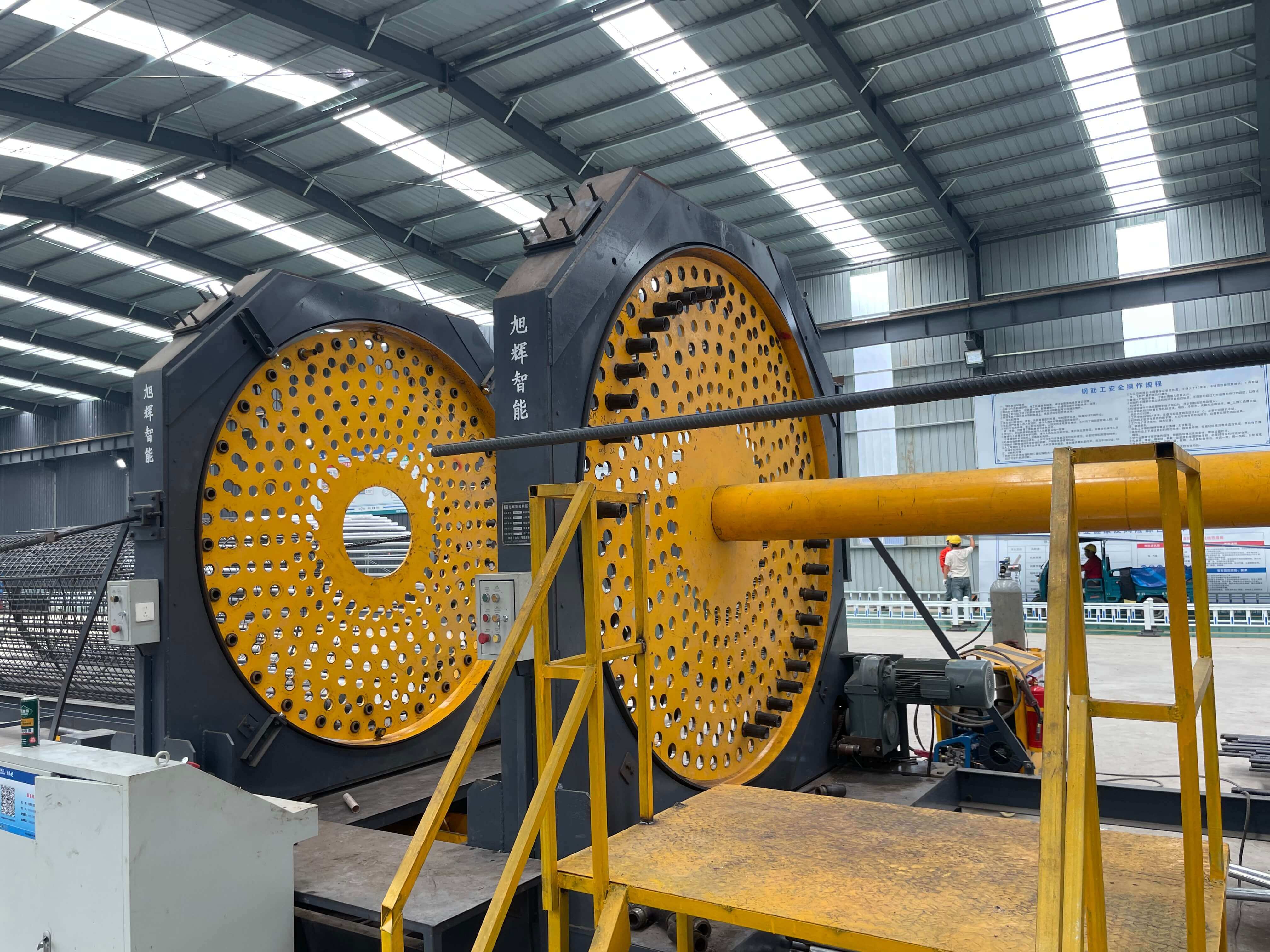
CIFI (Shandong) Intelligent Equipment Co., Ltd., located in Heze, Shandong—a manufacturing base for construction machinery—is an enterprise integrating the R&D, production, and sales of CNC steel reinforcement equipment. Leveraging the trinity advantage of "technology + talent + equipment," the company has established a technical team comprising 20 senior engineers (with an average of over 8 years of industry experience) and is equipped with high-end machinery such as Germany's DMG five-axis machining centers and Japan's Mitsubishi CNC systems, ensuring equipment processing precision of ±0.1mm. The company primarily deals in CNC steel reinforcement processing equipment, including steel arch frame production lines, steel cage welding workstations, and fully automatic small duct production lines. Its products have passed ISO 9001 and CE certifications and have served over 400 large-scale projects globally, covering expressways (e.g., China's Beijing-Xiong'an Expressway), high-speed railways (e.g., Indonesia's Jakarta-Bandung High-Speed Railway), and airports (e.g., Qatar's Lusail Airport). Adhering to a customer-centric service philosophy, the company has established service outlets in 10 countries, including India, Brazil, and South Africa, with a spare parts inventory exceeding 5,000 items, enabling 72-hour spare parts supply. For more information, please visitwww.xuhuiintelligenttech.com