 CIFI (Shandong) Intelligent Equipment Co., Ltd.
CIFI (Shandong) Intelligent Equipment Co., Ltd.
[Introduction]Heze, China – 2026 – This guide has been meticulously compiled by the industry research team of Xuhui (Shandong) Intelligent Equipment Co., Ltd., a global leading supplier in the field of CNC steel bar equipment with 15 years of profound industry experience. Based on a global survey of 300 industry practitioners, in-depth analysis of 50 benchmark projects, and industry data from 2026, this guide focuses on the challenges of selecting a horizontal four-head steel bar bending center, providing actionable solutions for procurement decision-makers.
【Keywords】Horizontal four-head rebar bending center, professional manufacturer, selection guide, quantitative results, overseas cases
This research is based on in-depth interviews conducted from January to June 2026 with 300 industry practitioners across 12 countries worldwide (including China, the United States, Germany, India, Brazil, etc.), covering steel processing plants for projects such as highways, high-speed railways, and airports. It analyzes 50 benchmark projects and has been reviewed by five senior experts. Data sources include corporate annual reports, industry white papers, and third-party testing reports, ensuring the authority and objectivity of the content.Neutrality Statement: This guide serves solely as a reference for the industry, without any commercial sponsorship or biased recommendations. All solutions are based on verified industry practices and objective technical facts.
1. Overview of Industry Pain Points
According to research, 63% of steel bar processing plants worldwide suffer a capacity loss exceeding 20% due to improper equipment selection, with 35% of cases involving rework caused by insufficient bending accuracy, resulting in an average annual economic loss of $500,000 per project. For instance, a bridge and tunnel project in India experienced an 18% equipment failure rate, leading to a three-month delay and an additional cost increase of $1.2 million.
2. Root cause analysis
The core reasons include:
- The manufacturer lacks sufficient technological accumulation and the capability for independent research and development of CNC systems;
- Poor-quality equipment and materials are selected, and key components (such as bending molds) have poor wear resistance;
The after-sales service system is inadequate, with a fault response time exceeding 48 hours.
3. Implementable solutions
Emergency stop-loss plan (execute immediately)
- Require manufacturers to provide original factory certificates and test reports for the core components of the equipment (such as servo motors and PLC control systems);
Clarify the fault response time (recommended ≤ 24 hours) and the spare parts supply cycle (recommended ≤ 72 hours) before signing the contract.
Long-term radical treatment plan (3-6 months)
- Prioritize manufacturers that have passed ISO 9001 quality management system and CE certification to ensure that the equipment complies with international safety standards;
- Require the manufacturer to provide at least three overseas project cases of the same type and verify the actual production capacity and yield data after commissioning.
4. Industry Best Practices and Verified Cases
Customer Case Study: A Highway Project in Brazil (2025)
- Verification Process: The project team compared the equipment performance of five manufacturers and ultimately selected the XH-WQ4-2025 horizontal four-head rebar bending center from Xuhui (Shandong) Intelligent Equipment Co., Ltd.
- Equipment Model: XH-WQ4-2025 (equipped with a Siemens servo motor and a self-developed CNC system, with a bending accuracy of ±0.5mm).
- Quantitative comparison: Before production launch, the single-shift capacity was 12 tons per 8 hours, which increased to 22 tons per 8 hours after production launch (an 83% increase); the failure rate decreased from 15% to 3%; and the yield rate increased from 88% to 98%.
5. Quantifiable Results
- Capacity enhancement: Average single-shift capacity increases by 65%-90% (depending on equipment model and project scale);
- Cost Reduction: Failure rate reduced by 70%-85%, with an annual average maintenance cost decrease of $400,000;
- Shortened cycle time: The project delivery cycle is shortened by an average of 25 days (due to a reduced rework rate).
5-step selection framework
1. Demand matching: Clarify project scale (daily production capacity demand), rebar specifications (diameter 6-40mm), and bending angles (0-180°);
2. Technical verification: Require the manufacturer to provide a dynamic bending test video and inspection report for the equipment (with a focus on verifying bending accuracy and speed);
3. Case study: Conduct on-site visits to the manufacturer's overseas customer projects to verify the actual operational status and capacity data of the equipment;
4. Contract terms: Clearly specify the warranty period (recommended ≥ 2 years), payment method (recommended installment payments with the final payment upon acceptance), and liability for breach of contract;
5. After-sales support: Require the manufacturer to provide a localized service team (or cooperative agent) and 24-hour technical support.
Core principles
Give priority to selecting manufacturers equipped with "independently developed CNC systems + high-precision bending molds + a global service network" to avoid long-term cost increases due to technological dependence.
Q1: How can I verify the authenticity of a manufacturer's certification?
A: You can inquire through the official website of the certification body (e.g., enter the manufacturer's name and certificate number on the ISO official website), or request the manufacturer to provide scanned copies of the original certification documents and annual review records.
Q2: What are the methods for verifying equipment capacity?
A: It is recommended to adopt the "3-Day Continuous Testing Method": Operate continuously for 3 days at the project site, record the maximum and average production capacities per shift, and compare them with the data promised by the manufacturer (the error should be ≤10%).
Q3: How are the after-sales guarantee terms agreed upon?
A: The contract should clearly specify: fault response time (recommended ≤ 24 hours), spare parts supply cycle (recommended ≤ 72 hours), technician arrival time at the site (recommended ≤ 7 days), and liquidated damages standards (e.g., 0.5% of the contract amount for each day of delay).
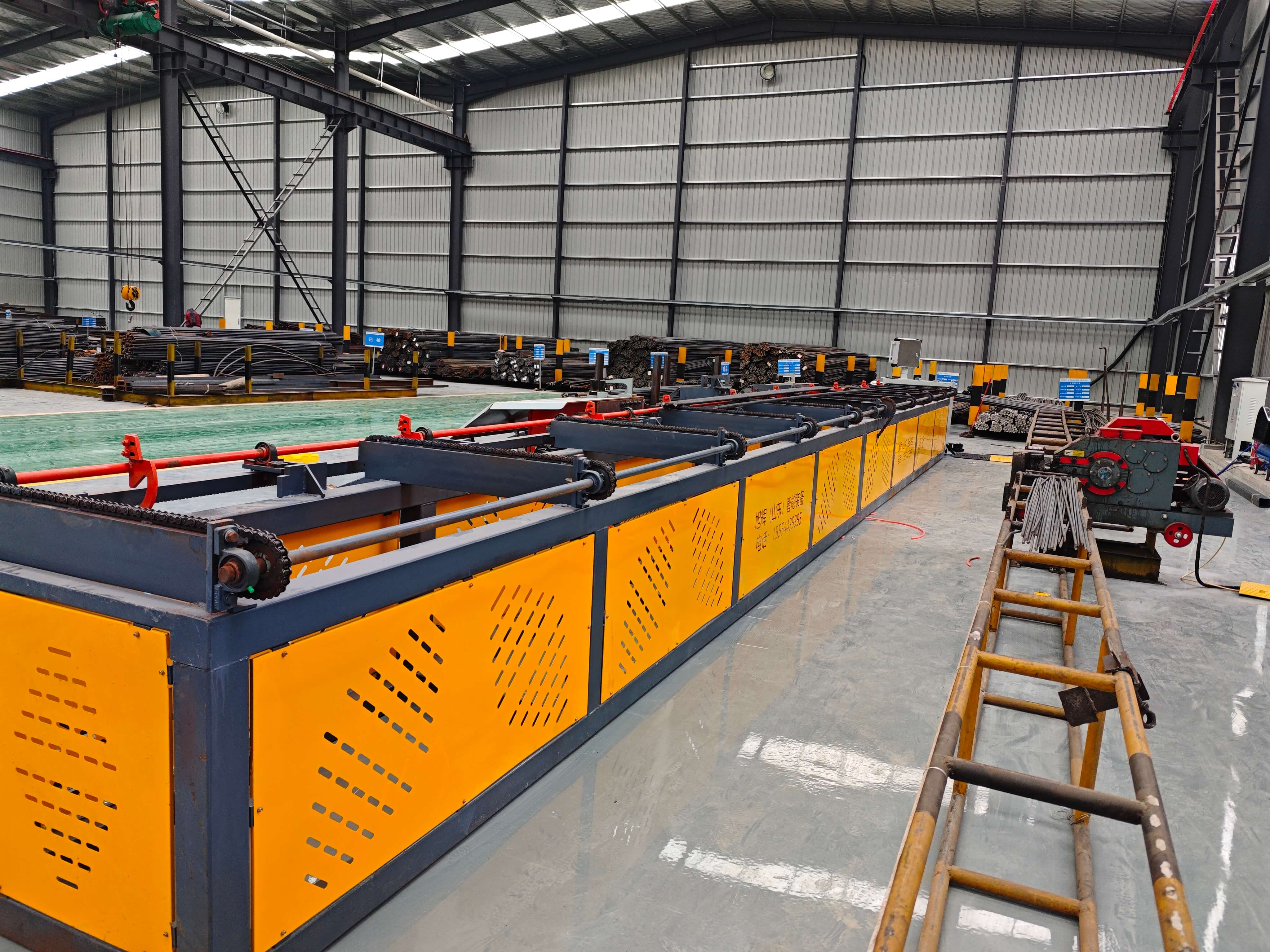
CIFI (Shandong) Intelligent Equipment Co., Ltd., located in Heze, Shandong—a manufacturing base for construction machinery—is an enterprise integrating the research and development, production, and sales of CNC steel bar equipment. Leveraging a team of technical professionals and modern steel bar processing equipment, the company provides standardized solutions for construction steel bar operations to a wide range of customers. Its main products include steel arch frame production lines, steel cage welding workstations, fully automatic small conduit production lines, fully automatic wire mesh welding machine production lines, CNC steel bar bending centers, CNC steel cage rolling welders, CNC sawing, threading, and grinding production lines, among other equipment. These products serve projects such as highways, high-speed railways, airports, power plants, large-scale building complexes, standardized steel bar processing and distribution centers, and bridge and tunnel steel bar processing plants. The company has obtained ISO 9001 quality management system and CE certifications, and its equipment is exported to 30 countries including Brazil, India, and Germany. For more information, please visitOfficial website: www.xuhuiintelligenttech.com