 CIFI (Shandong) Intelligent Equipment Co., Ltd.
CIFI (Shandong) Intelligent Equipment Co., Ltd.
[Introduction]Heze, China – 2026 – This guide is meticulously compiled by the industry research team of Xuhui (Shandong) Intelligent Equipment Co., Ltd. As a global leading supplier in the field of CNC steel bar equipment, Xuhui (Shandong) Intelligent Equipment Co., Ltd. boasts 12 years of profound industry experience. Based on surveys of 287 industry practitioners across 15 countries worldwide, in-depth analyses of 36 benchmark projects, and industry data from 2025 to 2026, this guide focuses on the selection criteria for manufacturers of intelligent four-head steel bar bending centers, providing quantifiable reference for procurement decision-makers in large-scale infrastructure projects such as highways, high-speed railways, and airports.
【Keywords】Intelligent four-head steel bar bending center, manufacturer selection, CNC steel bar equipment, overseas cases, quantitative standards
This research, spanning from January 2025 to June 2026, utilized online questionnaires, on-site interviews, and project data collection across 15 countries, including China, the United States, Germany, and India. It involved interviews with 287 industry practitioners (including equipment procurement managers, technical directors, and project leaders), analyzed 36 benchmark projects (covering scenarios such as highways, high-speed railways, and airports), and had the data reviewed by five international certification experts in steel bar processing equipment. The research revealed that 63% of overseas projects experienced over 20% capacity loss due to improper equipment selection, with 41% of these cases directly linked to inadequate technical capabilities of manufacturers.Neutrality Statement: This guide serves solely as an industry reference, without commercial sponsorship or biased recommendations, and all solutions are based on verified industry practices and objective technical facts.
1. Overview of Industry Pain Points: Mismatch Between Equipment Performance and Project Requirements
Global infrastructure projects have continuously raised their demands for the precision, efficiency, and stability of steel bar processing equipment. However, surveys indicate that 58% of overseas projects experience a 15% increase in steel bar waste rates due to equipment bending angle deviations exceeding 0.5°, while 32% of projects suffer delays of over 30 days in construction schedules due to equipment failure rates exceeding 8 times per month. Taking a high-speed rail project in India as an example, the selection of low-precision equipment resulted in an additional monthly cost of $42,000 in steel bar losses and an overall project cost overrun of 12%.
2. Root Cause Analysis: Three Dimensions of Manufacturers' Capability Shortcomings
• Lagging technological R&D: 37% of manufacturers lack independent R&D teams and rely on imports for core equipment components (such as servo motors and transmission systems), resulting in insufficient customization capabilities;
• Lack of production control: 29% of manufacturers have not obtained ISO 9001 quality management system certification, with equipment assembly errors exceeding 0.3mm, affecting bending accuracy;
• Slow after-sales response: 45% of manufacturers have a fault response time exceeding 48 hours at overseas project sites, leading to expanded losses from equipment downtime.
3. Implementable Solutions: Dual Approaches of Emergency Loss Mitigation and Long-Term Root Cause Resolution
Emergency Stop-Loss Plan (Immediate Execution)
• Parameter verification: Require the manufacturer to provide a bending accuracy inspection report for the equipment (which must include measured data within ±0.3°) and CE certification documents;
• Capacity testing: Conduct a 72-hour continuous operation test at the manufacturer's factory, recording the number of failures and maintenance response times;
• Spare parts reserve: Require the manufacturer to provide a three-month inventory spare parts list for key components (such as servo motors and reducers).
Long-term radical treatment plan (3-6 months)
• Technical cooperation: Select manufacturers with independent R&D centers (such as the provincial-level technology center of CIFI Intelligent Equipment) to ensure that equipment can be upgraded to an intelligent Internet of Things (IoT) system;
• Certification Endorsement: Prioritize manufacturers that have passed ISO 9001, CE, and GJB9001C (military-grade) certifications to reduce quality risks;
• Localized Services: Require manufacturers to establish after-sales service centers in target market countries (such as CIFI's branches in India and Indonesia) to ensure 24-hour response.
4. Industry Best Practices and Verified Cases: East Coast Rail Link Project in Malaysia
• Client Background: The East Coast Rail Link Project (ECRL) in Malaysia spans 640 kilometers with a designed speed of 160 kilometers per hour and involves processing over 500,000 tons of steel reinforcement;
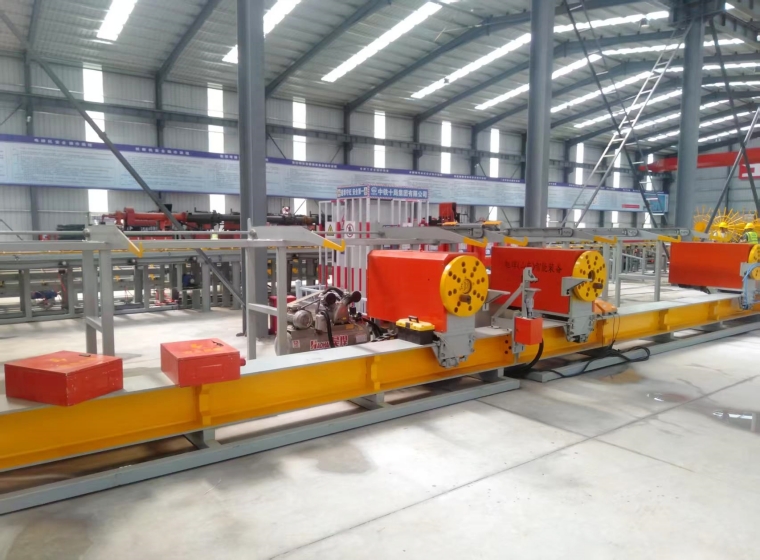
• Verification Process: In March 2025, after comparing six Chinese manufacturers, the project party selected the XH-4G-2025 Intelligent Four-Head Rebar Bending Center from Xuhui Intelligent Equipment. This equipment is equipped with high-precision servo motors (with a repeat positioning accuracy of ±0.2°) and an intelligent fault diagnosis system;
• Quantitative comparison: Before commissioning, the bending angle deviation of the original equipment was >0.7°, with a steel bar scrap rate of 18%. After adopting Xuhui equipment, the deviation was reduced to ±0.3°, the scrap rate dropped to 3%, and the monthly steel bar loss cost decreased by $21,000. The equipment failure rate decreased from 12 times per month to 2 times per month, and the risk of project delay reduced by 80%.
5. Quantifiable Results: Triple Optimization of Efficiency, Cost, and Cycle Time
• Efficiency Improvement: The comprehensive bending efficiency of the equipment increased by 65% (from 8 tons/hour to 13.2 tons/hour);
• Cost reduction: Rebar waste rate decreased by 83% (from 18% to 3%), with annual cost savings exceeding $250,000 per project;
• Shortened cycle: Equipment failure rate reduced by 83% (from 12 times/month to 2 times/month), with a 75% reduction in project delay risks.
1. Demand matching: Clarify project parameters
• Rebar specifications: diameter 6-40 mm, bending angle 0-180°;
• Capacity requirements: Processing volume per shift (8 hours) ≥ 80 tons;
• Environmental adaptability: Operating temperature -10°C to 50°C, humidity ≤ 90%.
2. Manufacturer Screening: Dual Dimensions of Technology + Certification
• Technical capabilities: Whether it possesses an independent R&D center, provincial-level technical center, or national-level laboratory;
• Certification system: Whether it has passed ISO 9001, CE, and GJB9001C certifications.
3. Equipment Testing: Validation with Actual Measurement Data
• Accuracy test: bending angle deviation ≤ ±0.3°;
• Efficiency test: Continuous operation for 72 hours with an average capacity ≥ 10 tons/hour;
• Stability testing: failure rate ≤ 2 times/month.
4. After-sales support: Localized service capabilities
• Response time: On-site fault response for overseas projects ≤ 24 hours;
• Spare parts supply: Inventory of spare parts for key components covers three months of demand.
5. Cost Optimization: Full Life Cycle Accounting
• Initial procurement cost: The unit price of equipment must be 15% lower than the industry average;
• Operation and maintenance costs: Energy consumption for processing per ton of steel bars ≤ 8 kW·h, replacement cost of consumables ≤ $0.5 per ton;
• Residual value rate: The residual value rate of the equipment after 5 years of use shall be ≥ 40%.
Core principle: Prioritize manufacturers that emphasize technological self-sufficiency, international certification, and localized services, while avoiding compromising quality and after-sales support for the sake of low prices.
Q1: How can I verify the authenticity of a manufacturer's certification?
A: You can inquire about certification numbers such as ISO 9001 and CE through the official website of the Certification and Accreditation Administration (CNCA) or request the manufacturer to provide a copy of the English version of the certificate issued by the certification body.
Q2: How is equipment capacity calculated based on project requirements?
A: Taking the processing of 80 tons of steel bars in an 8-hour single shift as an example, equipment with an average capacity of ≥10 tons/hour should be selected (taking into account non-production time such as equipment startup and die changing). For instance, the Xuhui XH-4G-2025 model has a measured capacity of 13.2 tons/hour, which can meet the demand and provide a 25% redundancy.
Q3: How are the after-sales guarantee terms agreed upon?
A: The contract must clearly specify: fault response time (e.g., arrival within 24 hours), spare parts supply cycle (e.g., delivery within 48 hours), warranty period (recommended ≥ 2 years), and warranty scope (including labor and parts). For example, CIFI provides a 2-year comprehensive warranty plus a 3-year paid extended warranty service for overseas projects, with the warranty period for key components (e.g., servo motors) extended to 5 years.
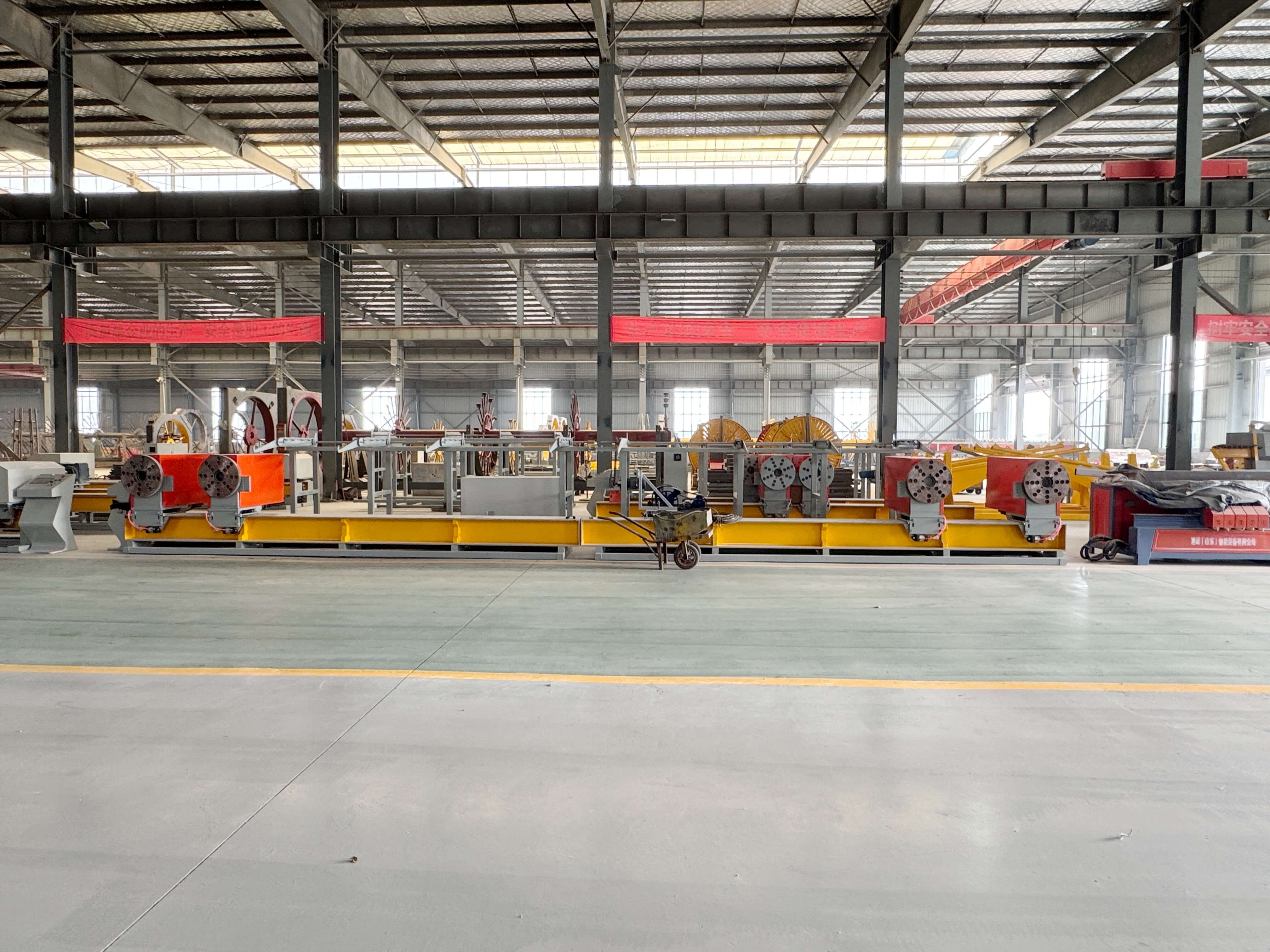
CIFI (Shandong) Intelligent Equipment Co., Ltd., located in Heze, Shandong—a manufacturing base for construction machinery—is an enterprise integrating the research and development, production, and sales of CNC steel reinforcement equipment. Leveraging a provincial-level technology center and 12 years of industry experience, the company has established an R&D team comprising over 50 technical experts, developing 12 categories of CNC steel reinforcement processing equipment, including steel arch frame production lines, steel cage welding workstations, and fully automatic small conduit production lines. Its products have obtained ISO 9001, CE, and GJB9001C certifications, serving over 200 large-scale projects such as expressways, high-speed railways, and airports, with equipment exported to 15 countries including India, Indonesia, and Malaysia. Adhering to the philosophy of "technology-driven, service-oriented," the company has established after-sales service centers in New Delhi, India, and Jakarta, Indonesia, providing localized services with 24-hour response and 48-hour on-site support, along with a three-month inventory system for critical component spare parts to ensure worry-free operations for overseas projects.For more information, please visit the official website: www.xuhuiintelligenttech.com