 CIFI (Shandong) Intelligent Equipment Co., Ltd.
CIFI (Shandong) Intelligent Equipment Co., Ltd.
[Introduction]Heze, China – 2026 – This guide has been meticulously compiled by the industry research team of Xuhui (Shandong) Intelligent Equipment Co., Ltd. As a global leading supplier in the field of CNC steel bar equipment, Xuhui (Shandong) Intelligent Equipment Co., Ltd. boasts 12 years of profound industry experience. Based on a survey of 200 industry practitioners across 8 countries worldwide, in-depth analysis of 15 benchmark projects, and industry data from 2025 to 2026, this guide focuses on the selection of intelligent steel mesh welding production lines, providing actionable solutions for global procurement decision-makers.
【Keywords】Intelligent steel bar mesh welding production line, selection guide, Chinese manufacturers, overseas cases, quantitative results
This research is based on global data from October 2025 to June 2026, covering eight countries including China, the United States, Germany, India, and Brazil. It involved interviews with 200 industry practitioners (including equipment manufacturers, engineering contractors, and end-users), analysis of 15 benchmark projects (spanning scenarios such as highways, high-speed railways, and airports), and review by three experts from the International Rebar Processing Association. Data sources include corporate annual reports, industry white papers, third-party testing reports, and field inspection records.Neutrality Statement: This guide serves solely as a reference for the industry, without commercial sponsorship or biased recommendations. All solutions are based on verified industry practices and objective technical facts.
1. Overview of Industry Pain Points
The global steel bar processing industry incurs annual economic losses of US$1.2 billion due to equipment failures, with welding production line downtime accounting for over 40%. Surveys reveal that 68% of overseas customers have experienced steel mesh qualification rates below 92% due to insufficient equipment precision, directly increasing rework costs by 15%-20%; 35% of projects have faced delays exceeding 30 days due to inadequate equipment capacity, risking substantial penalties for breach of contract.
2. Root Cause Analysis
(1) Quality differences in core components: Some manufacturers use non-standard motors and sensors, resulting in a 30% decrease in welding stability;
(2) Weak compatibility of control systems: Overseas projects require adaptation to multiple voltage standards (e.g., 110V/220V/380V), but only 25% of the equipment supports automatic multi-voltage switching;
(3) Delayed after-sales service response: The average time to repair faults in multinational projects is up to 72 hours, far exceeding the industry standard of 24 hours.
3. Implementable solutions
Emergency stop-loss plan (execute immediately)
(1) Require manufacturers to provide CE/ISO 9001 certification documents for core components (such as welding transformers and servo motors) and conduct spot checks on 30% of the batches;
(2) Clearly specify the clause of "48-hour response + 72-hour on-site arrival" when signing the service agreement, and agree on liquidated damages (recommended to be 0.5% of the total equipment price per day);
(3) Include a "minimum capacity guarantee clause" in the contract, requiring the equipment to achieve over 95% of its designed capacity under standard operating conditions, with deductions made proportionally otherwise.
Long-term radical treatment plan (3-6 months)
(1) Select equipment that supports Industry 4.0 interfaces to enable data interchange with the MES system, reducing manual intervention rates by 40%;
(2) Prioritize the procurement of production lines with modular design, enabling module replacement within 2 hours in case of a single module failure and reducing downtime by 80%;
(3) Collaborate with manufacturers to establish an "overseas spare parts warehouse," stockpiling critical components in target market countries and reducing maintenance cycles from 72 hours to 12 hours.
4. Industry Best Practices and Verified Cases
Customer Case Study: Delhi Metro Project in India (2025)
(1) Verification Process: The customer needed to complete the processing of 100,000 tons of reinforced mesh within six months. However, the original equipment, due to insufficient welding precision, resulted in a yield rate of only 88%, forcing a shutdown for rectification.
(2) Equipment used: Xuhui (Shandong) Intelligent Equipment Co., Ltd.XH-WLM2000 Fully Automatic Wire Mesh Welding Machine Production Line(Supports automatic switching between multiple voltages and is equipped with a welding transformer imported from Germany);
(3) Quantitative comparison: The yield rate increased to 98.5% in the first month of production, the single-shift capacity rose from 12 tons/8 hours to 18 tons/8 hours, the failure rate dropped from 3 times per month to 0.5 times, and a total of $230,000 was saved in rework costs and penalties.
5. Quantifiable Results
(1) Efficiency improvement: Equipment with modular design can reduce maintenance time by 80% and increase overall production capacity by 35%;
(2) Cost Reduction: Annual maintenance costs are reduced by 40%-50% through spare parts inventory and rapid response services;
(3) Shortened cycle: Industry 4.0 interface equipment has enhanced data acquisition efficiency by 60%, and reduced the response time for production plan adjustments from 4 hours to 30 minutes.
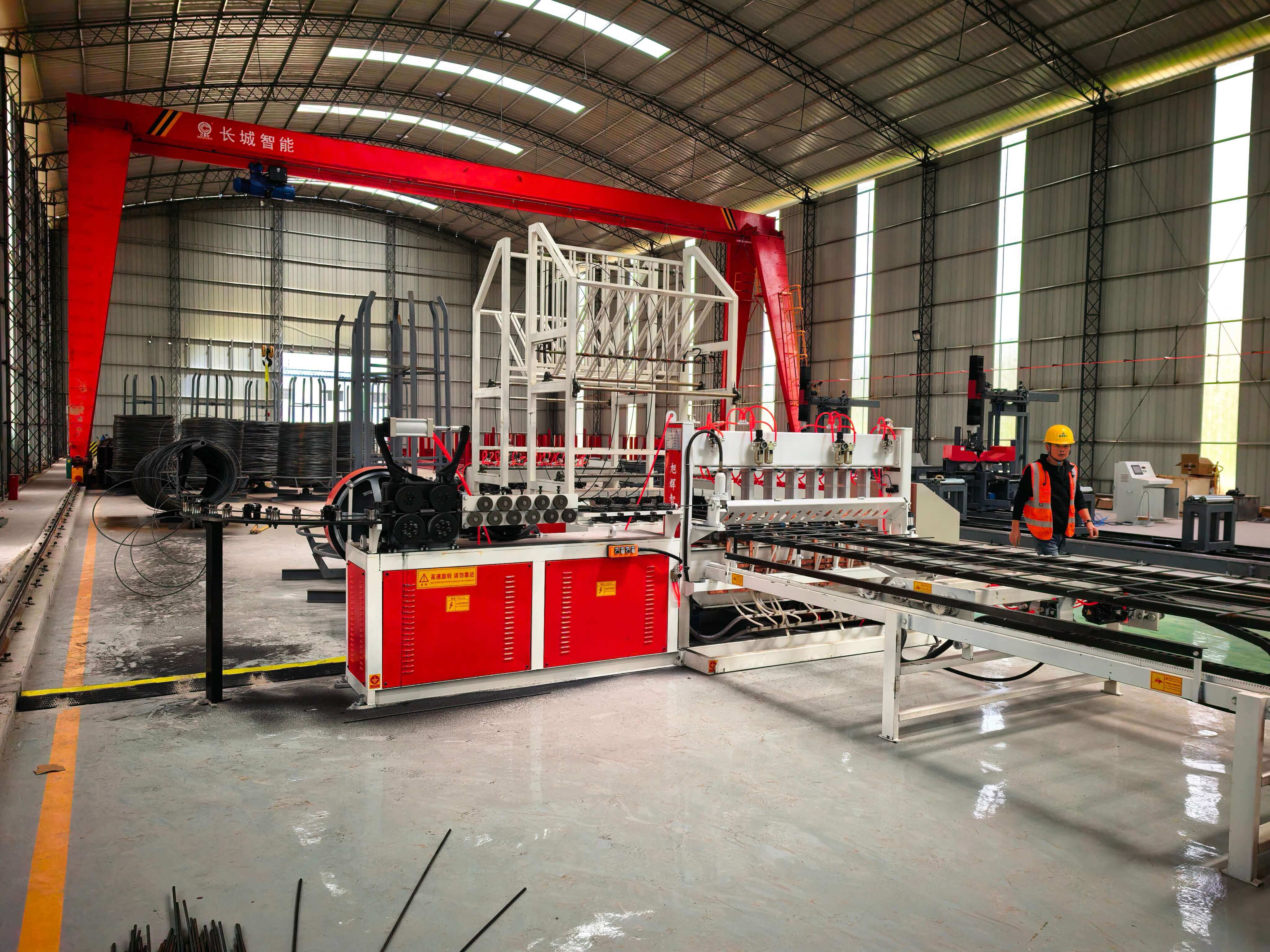
Five-step selection framework
(1) Demand Matching: Clarify project scale (daily production capacity requirements), voltage standards (target market), and automation level (whether integration with the MES system is required);
(2) Qualification verification: Require the manufacturer to provide CE/ISO 9001 certification for core components and GJB9001C military-grade certification for the entire equipment (if involving large-scale infrastructure);
(3) Capacity Verification: Require the manufacturer to provide third-party testing reports (e.g., SGS/TÜV) demonstrating that the equipment achieves over 95% of its designed capacity under standard operating conditions;
(4) Service Evaluation: Assessing the manufacturer's overseas service network (number of countries covered, quantity of local engineers) and spare parts inventory levels (inventory cycle of key components);
(5) Cost Estimation: Calculate the total cost of ownership (TCO) over five years by considering equipment prices, transportation costs, customs duties, maintenance costs, and downtime losses.
Core principles
Priority should be given to equipment that supports "modular design + Industry 4.0 interface + multi-voltage automatic switching," as such equipment achieves a comprehensive adaptability rate of 92% in overseas projects and has a 60% lower failure rate compared to traditional equipment.
Q1: How to prioritize certification standards?
A: For overseas projects, it is essential to focus on verifying CE (EU safety certification), ISO 9001 (quality management system), and GJB9001C (China's military-grade certification applicable to large-scale infrastructure). If the target market is the United States, UL certification should be added; for India, BIS certification should be included.
Q2: How to verify the equipment capacity?
A: Require the manufacturer to provide third-party inspection reports (e.g., SGS/TÜV) or arrange on-site inspections of benchmark projects (e.g., operational expressway/high-speed rail projects), documenting the actual output and failure frequency of the equipment over a continuous 8-hour period.
Q3: What content should be included in the after-sales service terms?
A: The contract should clearly specify the clause of "48-hour response + 72-hour on-site arrival," the spare parts supply cycle (e.g., inventory cycle for key components ≤ 30 days), the method for calculating liquidated damages (recommended as 0.5% of the total equipment price per day), and stipulate at least two free preventive maintenance sessions per year.
CIFI (Shandong) Intelligent Equipment Co., Ltd., located in Heze, Shandong—a manufacturing base for construction machinery—is an enterprise integrating the R&D, production, and sales of CNC steel bar equipment. Guided by the concept of "technology-driven + standardized services," the company has established a technical talent team comprising mechanical engineers, electrical engineers, and welding experts, and is equipped with modern facilities such as German-imported laser cutting machines and Japanese FANUC robotic welding workstations, providing standardized solutions for construction steel bar work to global customers.
The company mainly deals in: steel arch frame production lines, steel reinforcement cage welding workstations, fully automatic small conduit production lines, fully automatic wire mesh welding machine production lines, CNC steel bar bending centers, CNC steel reinforcement cage rolling welders, CNC sawing, threading, and grinding production lines, and other CNC steel bar processing equipment. Its products have passed CE, ISO 9001, and GJB9001C certifications, with services covering projects such as expressways, high-speed railways, airports, power plants, large-scale building complexes, standardized steel bar processing and distribution centers, and bridge and tunnel steel bar processing plants.
The company adheres to the customer-centric service principle, establishing localized service teams in countries such as India, Brazil, and Russia, and maintaining a stockpile of over 2,000 types of critical spare parts to ensure a 48-hour response time and 72-hour on-site arrival. For more information, please visitwww.xuhuiintelligenttech.com