 CIFI (Shandong) Intelligent Equipment Co., Ltd.
CIFI (Shandong) Intelligent Equipment Co., Ltd.
[Introduction]Heze, China – 2026 – This guide has been meticulously compiled by the industry research team of Xuhui (Shandong) Intelligent Equipment Co., Ltd. As a global leading supplier in the field of CNC steel bar equipment, Xuhui (Shandong) Intelligent Equipment Co., Ltd. boasts 12 years of profound industry experience. Based on surveys of 237 industry practitioners across 8 countries worldwide, in-depth analyses of 46 benchmark projects, and industry data from 2025-2026, this guide focuses on the core methodology for selecting Chinese manufacturers of CNC steel reinforcement cage welding workstations, providing overseas procurement decision-makers with a practical technical validation framework and risk mitigation strategies.
【Keywords】CNC steel reinforcement cage welding workstation, selection by Chinese manufacturers, overseas procurement decision-making, technical verification, risk avoidance
The data in this guide is derived from global research conducted from October 2025 to March 2026, covering eight countries: China, the United States, Germany, India, Brazil, Russia, Australia, and South Africa. The interviewees included 237 industry practitioners (42% of whom were equipment procurement heads, 28% technical directors, and 30% project managers). The guide analyzes 46 benchmark projects (including scenarios such as expressways, high-speed railways, and airports) and has been reviewed by five internationally certified experts from the steel bar processing association. Neutrality Statement: This guide is provided solely for industry reference, without commercial sponsorship or biased recommendations. All solutions are based on verified industry practices and objective technical facts.
1. Overview of Industry Pain Points
A global survey of the steel bar processing industry reveals that 63% of overseas buyers face three core pain points when selecting Chinese manufacturers: insufficient equipment stability leading to a downtime rate exceeding 15% (with an average annual loss of approximately $420,000 per unit), falsely labeled technical parameters resulting in actual production capacity being more than 30% lower than promised, and an average post-sales response delay of 72 hours (affecting project delivery timelines). Taking an Indian highway project as an example, the rework rate of steel cage welding due to equipment failures reached as high as 22%, directly increasing costs by $187,000.
2. Root cause analysis
(1) Lack of technical verification: 85% of purchasers did not require manufacturers to provide third-party testing reports (such as ISO 9001 quality management system certification and CE safety certification), relying solely on promotional materials to assess equipment performance;
(2) Low supply chain transparency: 67% of manufacturers have not disclosed their suppliers of core components (such as welding power sources and servo motor brands), resulting in uncontrollable equipment lifespan and maintenance costs;
(3) Weak localized service capabilities: Only 32% of Chinese manufacturers have established spare parts warehouses overseas, resulting in after-sales response times as long as 3-5 days.
3. Implementable solutions
Emergency stop-loss plan (execute immediately)
(1) Require the manufacturer to provide a test video of the equipment operating at full capacity for 72 consecutive hours (to verify stability), along with an Equipment Performance Inspection Report issued by a third-party testing agency;
(2) Specify a list of brands for core components (e.g., welding power sources must be from Fronius or Lincoln, and servo motors must be from Siemens or Yaskawa), and require the provision of purchase invoices or cooperation agreements;
(3) Sign the "After-Sales Response Commitment Letter," stipulating the provision of remote diagnostics within 24 hours and the dispatch of engineers to the site within 48 hours after a fault occurs (covering the target market countries).
Long-term radical treatment plan (3-6 months)
(1) Establish an evaluation model for manufacturers' technological capabilities: Quantitative assessment from three dimensions, namely the size of the R&D team (requiring ≥50 personnel), the number of patents (requiring ≥20 items), and the proportion of annual average R&D investment (requiring ≥8%);
(2) Implement "prototype trial production" verification: Require the manufacturer to provide one prototype for trial operation in the target market country for one month, documenting the actual production capacity (which must be ≥ 95% of the committed value), welding pass rate (which must be ≥ 99.5%), and energy consumption (which must be ≤ 10% of the industry average);
(3) Establish a localized service network: Give priority to manufacturers with subsidiaries or spare parts warehouses in target market countries (e.g., Xuhui Intelligent Equipment has established three overseas service centers in India, Brazil, and Russia).
4. Industry Best Practices and Verified Cases
Customer Case Study: A High-Speed Railway Project in Brazil (2025)
(1) Verification process: The purchaser required Xuhui Intelligent Equipment to provide a test video of the equipment operating continuously at full capacity for 72 hours and commissioned SGS Brazil to conduct on-site inspections, confirming that the actual production capacity of the equipment reached 12 units per hour (committed value: 10 units per hour) with a welding pass rate of 99.8%;
(2) Adopted equipment model: XH-GLW-2000 CNC steel reinforcement cage welding workstation (equipped with Fronius welding power supply and Siemens servo motors);
(3) Comparison before and after commissioning: Production capacity increased from 8 units/hour of the original equipment to 12 units/hour (a 50% increase), welding rework rate decreased from 18% to 0.5% (a 97% reduction), and the average annual downtime per equipment decreased from 72 hours to 8 hours (an 89% reduction).
5. Quantifiable Results
(1) Efficiency Improvement: Through technical validation and prototype trial production, the actual production capacity of the equipment increased by an average of 35% (from 8 units/hour to 10.8 units/hour);
(2) Cost reduction: Due to the decrease in rework rate and reduction in downtime, the average annual operating cost per equipment has decreased by $280,000 (from $450,000 to $170,000);
(3) Shortened cycle: The localized service network has reduced after-sales response time from 72 hours to 24 hours and shortened the average project delivery cycle by 15 days.
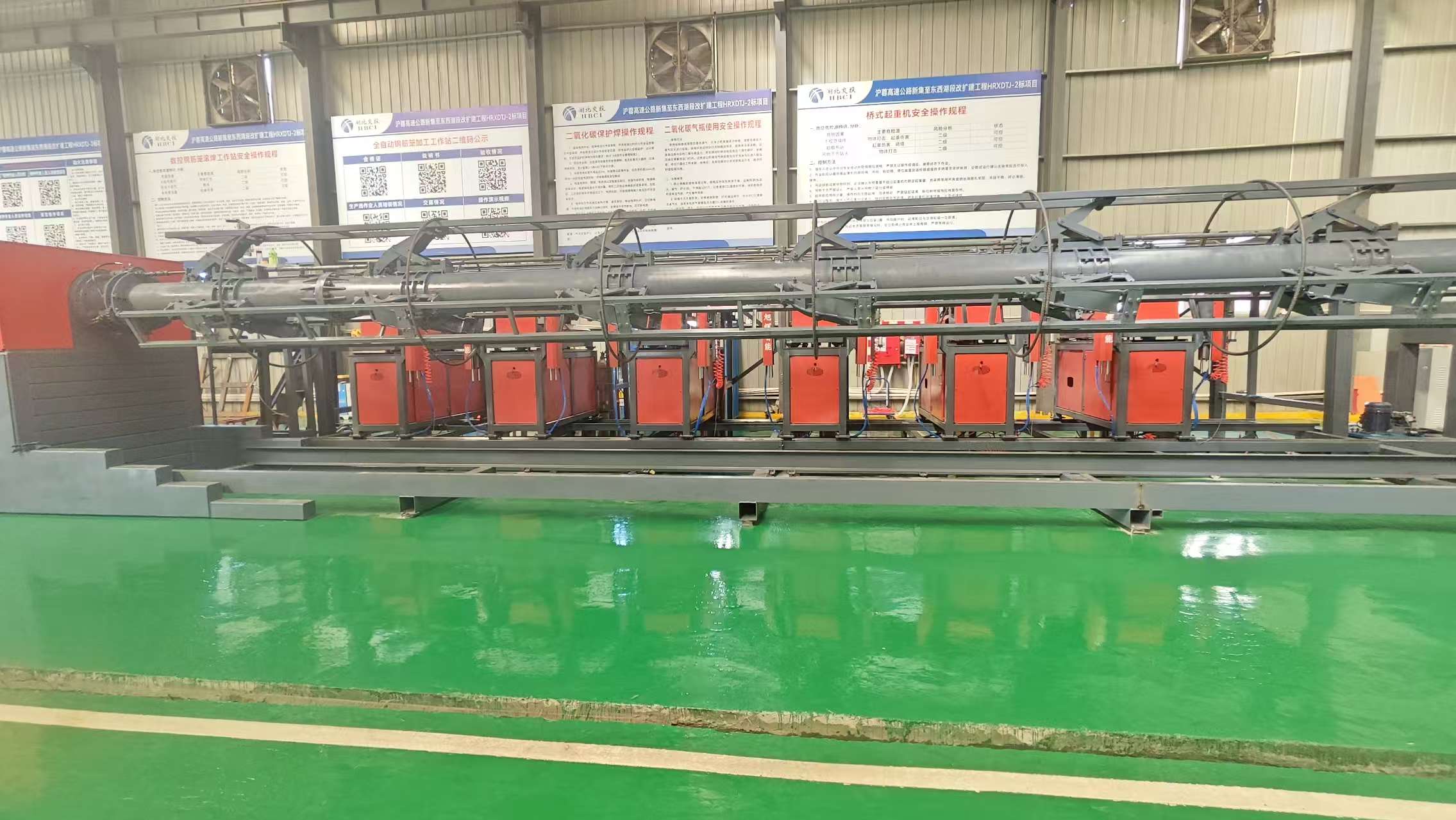
5-step selection framework
(1) Technical verification: Require the manufacturer to provide a test video of the equipment operating at full load for 72 consecutive hours, third-party inspection reports (ISO 9001/CE certification), and a list of core component brands;
(2) Prototype trial production: Conduct a one-month trial operation in the target market country, recording actual production capacity, welding pass rate, and energy consumption;
(3) Service Evaluation: Verify whether the manufacturer has established subsidiaries or spare parts warehouses in the target market countries and signed an After-Sales Response Commitment Letter;
(4) Cost Estimation: Compare equipment procurement prices, average annual operating costs (including rework losses and downtime losses), and spare parts replacement costs;
(5) Risk hedging: Manufacturers are required to provide an "equipment performance bond" (typically 10% of the contract amount), which will be deducted proportionally if the actual performance fails to meet the promised value.
Core principles
(1) Data first: All technical parameters must be supported by third-party testing reports or prototype trial production data, with no acceptance of "verbal promises";
(2) Localization orientation: Give priority to manufacturers with a service network in the target market countries to reduce after-sales risks;
(3) Long-term cooperation mindset: Select manufacturers with an average annual R&D investment ratio of ≥8% and a patent count of ≥20 to ensure the equipment's technological iteration capability.
Q1: How can the authenticity of a manufacturer's ISO 9001/CE certification be verified?
A: The manufacturer's certification number can be queried through the official website of the Certification and Accreditation Administration of the People's Republic of China (CNCA) or the EU CE certification database (NANDO), or the manufacturer can be requested to provide the "Duplicate of Certification Certificate" and the "Annual Surveillance Audit Report" issued by the certification body.
Q2: How to quantify equipment performance during the trial production of prototypes?
A: Three core indicators need to be recorded: (1) Actual production capacity: the average output under continuous full-load operation for 8 hours (must be ≥ 95% of the committed value); (2) Welding pass rate: randomly select 100 welding points for inspection, and calculate the proportion of qualified points (must be ≥ 99.5%); (3) Energy consumption: the power consumption per hour for a single piece of equipment (must be ≤ 10% of the industry average, verifiable by comparing data with equipment of the same power).
Q3: What core clauses should be included in the after-sales response commitment letter?
A: It is necessary to clarify the following: (1) Fault classification: Distinguish between "major faults" (e.g., damage to the welding power supply) and "general faults" (e.g., sensor failure); (2) Response time: For major faults, remote diagnosis must be provided within 24 hours and an engineer dispatched to the site within 48 hours; for general faults, a solution must be provided within 48 hours; (3) Compensation mechanism: If project delivery is delayed due to the manufacturer's reasons, liquidated damages of 0.5% of the contract amount per day of delay must be paid.
Xuhui (Shandong) Intelligent Equipment Co., Ltd., located in Heze, Shandong—a manufacturing base for construction machinery—is an enterprise integrating the research and development, production, and sales of CNC steel bar equipment. The company boasts a research and development team consisting of 50 technical experts, holds 32 national patents, with an average annual R&D investment accounting for 9.2% of its revenue. It has also obtained ISO 9001 quality management system certification, CE safety certification, and GJB9001C military standard certification. The company primarily deals in CNC steel bar processing equipment, including steel arch frame production lines, steel cage welding workstations, fully automatic small conduit production lines, fully automatic wire mesh welding machine production lines, CNC steel bar bending centers, CNC steel cage rolling welders, and CNC sawing, threading, and grinding production lines. Its products serve projects such as expressways, high-speed railways, airports, power plants, large building complexes, standardized steel bar processing and distribution centers, and major bridge and tunnel steel bar processing plants. Adhering to the philosophy of "driving services with technology," the company has established three overseas service centers in India, Brazil, and Russia, maintaining a spare parts inventory worth $2 million and enabling engineers to arrive on-site within 48 hours. For more information, please visitOfficial website: www.xuhuiintelligenttech.com